
During Durga Puja, Kolkata turns for five days into an open-air gallery of temporary pavilions called pandals. Each neighbourhood committee builds its own, and visitors walk from one to the next late into the night. This guide covers how to plan Durga Puja pandal hopping in Kolkata: which areas to group together, when to go, how to move around and what to expect on the last day.
Know before you go
- What it is: the annual worship of the goddess Durga, held in September or October.
- UNESCO status: “Durga Puja in Kolkata” was inscribed on the Representative List of the Intangible Cultural Heritage of Humanity in 2021.
- Main days: Shashthi to Dashami, five days in all. Saptami, Ashtami and Navami draw the biggest crowds.
- 2027 dates: Shashthi falls around 5 October 2027 by the Hindu calendar; confirm the exact dates closer to the time.
- Getting around: on foot and by Kolkata Metro; roads near the big pandals close to traffic in the evenings.
- Last checked: 27 October 2026 (sources under Official resources below).
In this Article
- What Durga Puja in Kolkata is
- The puja days
- North Kolkata pandals
- Kumartuli, the idol makers’ quarter
- South Kolkata pandals
- Salt Lake and Lake Town pujas
- The sound of the puja: dhak and dhakis
- Dashami: sindoor khela and immersion
- How to plan your pandal hopping
- Where to stay
- Combining the puja with Kolkata sights
- FAQ
What Durga Puja in Kolkata is
UNESCO describes Durga Puja as an annual festival held in September or October, celebrated most notably in Kolkata and also across India and among the Bengali diaspora. It marks the worship of the mother-goddess Durga. In the months before the festival, small workshops sculpt images of Durga and her family from unfired clay taken from the Ganga. The festival begins with Mahalaya, when the eyes are painted on the images, and ends on the tenth day, when the images are immersed in the river the clay came from.
UNESCO’s decision also notes the large installations and pavilions in urban areas, the traditional Bengali drumming, and the crowds who walk around to admire the work. That walking is what pandal hopping means: going from pandal to pandal, through the evening and night.
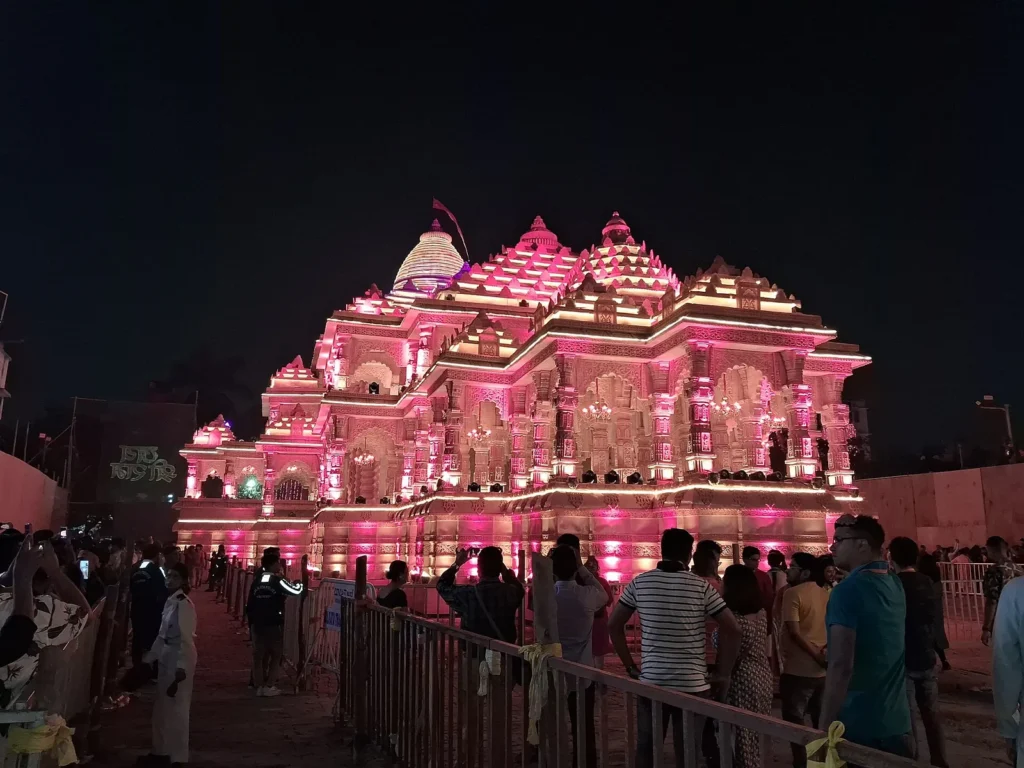
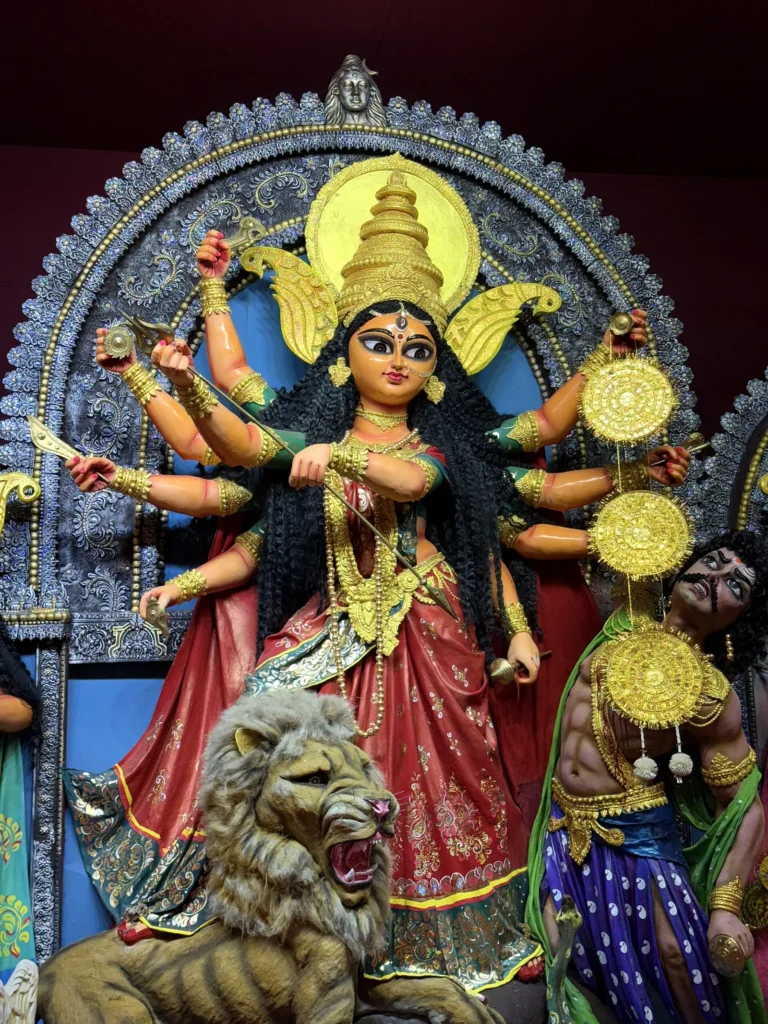
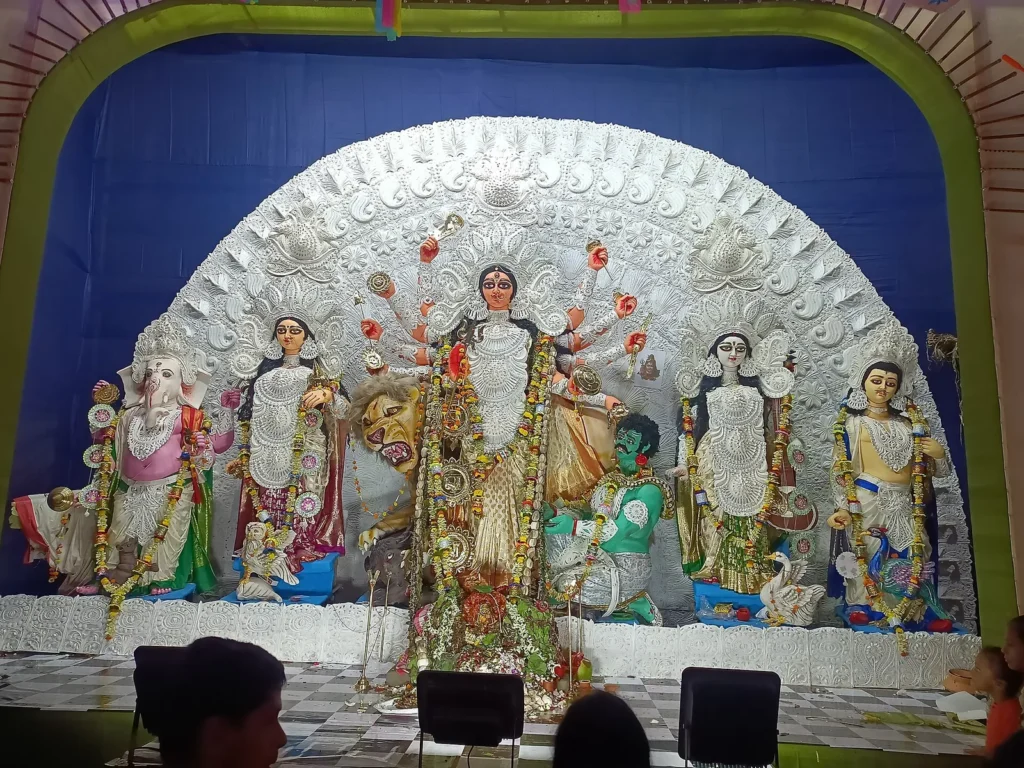
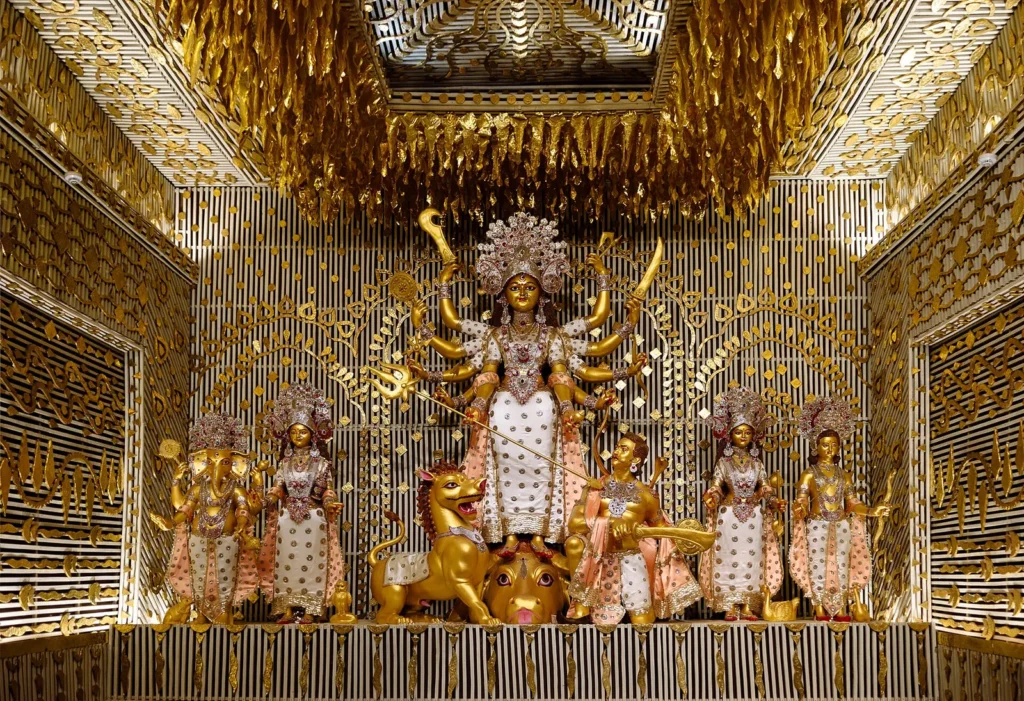
Each pandal is built by a local committee, called a club or a sarbojanin (community) puja. Some keep a traditional style, with the goddess, her children and the demon Mahishasura arranged on a single frame. Others are themed, with the whole structure built around an idea, a craft or a copy of a famous building.
The puja days
The festival runs over five main days, named after the days of the lunar fortnight:
| Day | What happens |
|---|---|
| Shashthi | The goddess is formally welcomed; pandals open to visitors |
| Saptami | Rituals begin in earnest; evening crowds build |
| Ashtami | Morning anjali (offering of flowers); one of the busiest days |
| Navami | Last full night of pandal hopping |
| Dashami | Sindoor khela, farewells and immersions begin |
Mahalaya, about a week earlier, marks the start of Devi Paksha, the fortnight of the goddess. Some big pandals open to visitors from Panchami or even earlier, so the crowds start before Shashthi.
Durga Puja 2026 ran from Shashthi on 16 October to Dashami on 21 October. For 2027, almanac sites put Shashthi around 5 October, but they differ on the later days, so check the West Bengal government holiday list before you book travel.
North Kolkata pandals
North Kolkata holds the older, traditional pujas. The area is dense and walkable, and the Blue Line of the Kolkata Metro runs through it.
- Bagbazar Sarbojanin: one of the old community pujas, near the river in Bagbazar, with a traditional-style image.
- Kumartuli Park: next to the idol makers’ quarter.
- Ahiritola and Kashi Bose Lane: close to Kumartuli and easy to add on foot.
- Chalta Bagan and nearby pujas around Girish Park.
- Mohammad Ali Park and College Square: in central Kolkata, close to College Street.
- Santosh Mitra Square: near Sealdah.
Shobhabazar Sutanuti and Girish Park metro stations serve this cluster. Bagbazar, Kumartuli and Ahiritola sit close together, so you can walk between them in one evening.
Kumartuli, the idol makers’ quarter
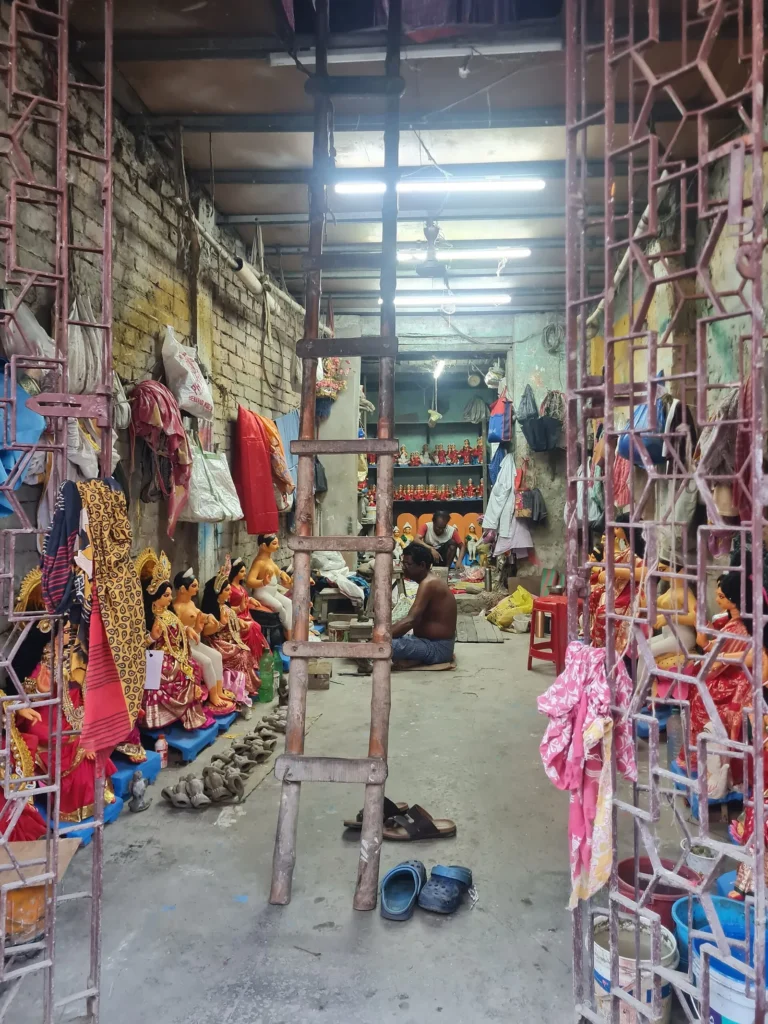
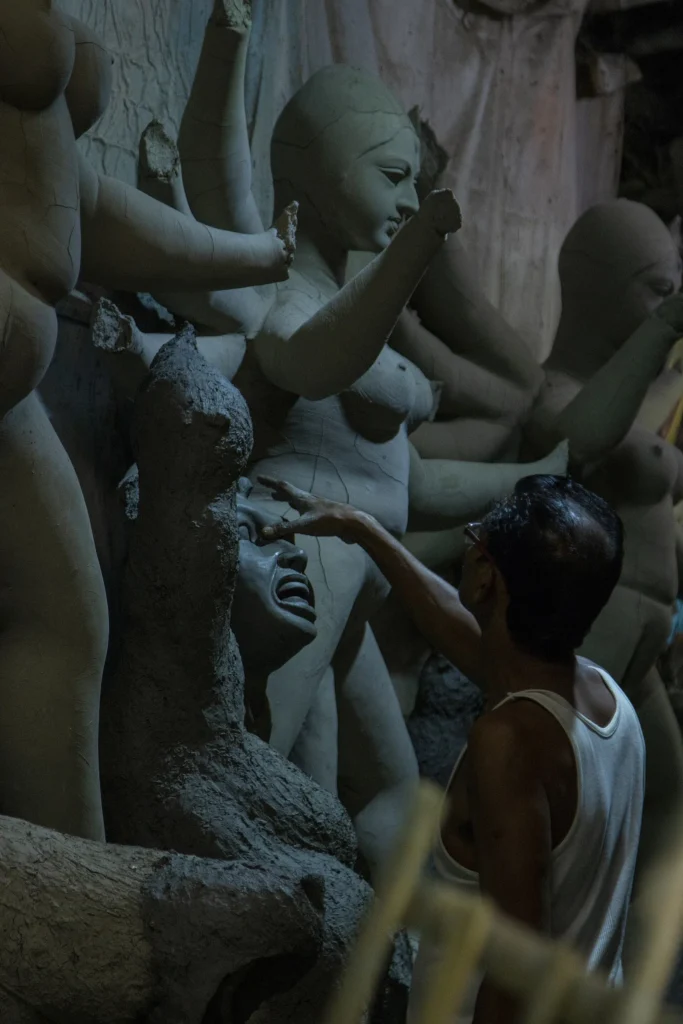
Kumartuli is the neighbourhood of potters and sculptors in North Kolkata where Durga images are made for pandals across the city. In the weeks before the festival, the narrow lanes fill with straw frames, clay figures at different stages and painters finishing faces. It is the best place to see the craft that UNESCO’s description highlights. It is worth a visit before the puja starts, when the workshops are busiest and the streets are less crowded.
Workshops are working spaces, so ask before taking photos and stay out of the way of the artisans.
South Kolkata pandals
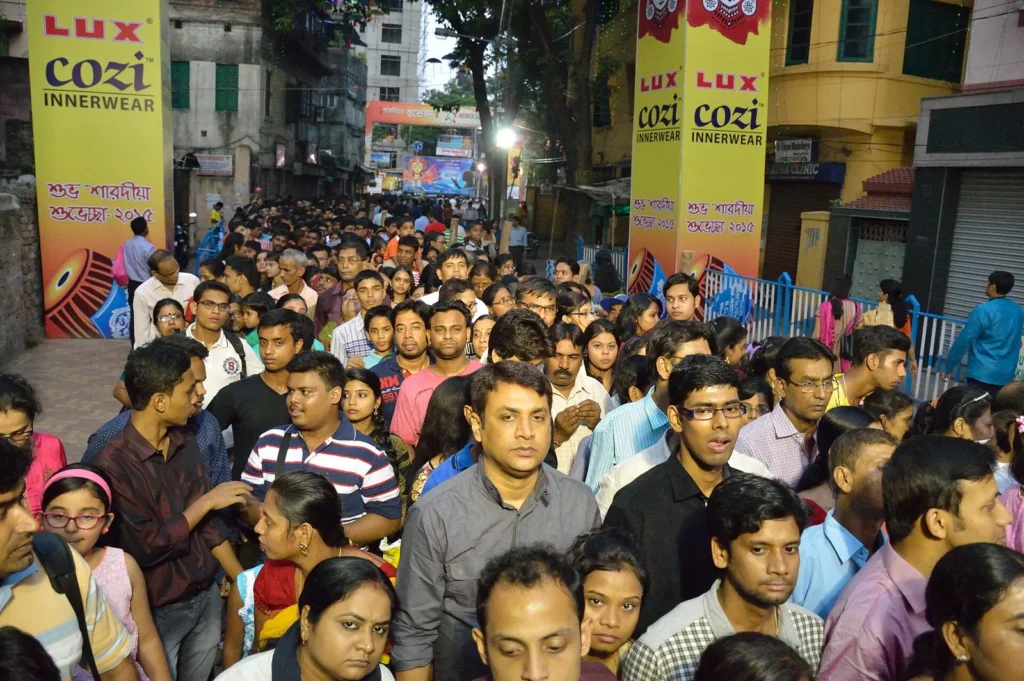
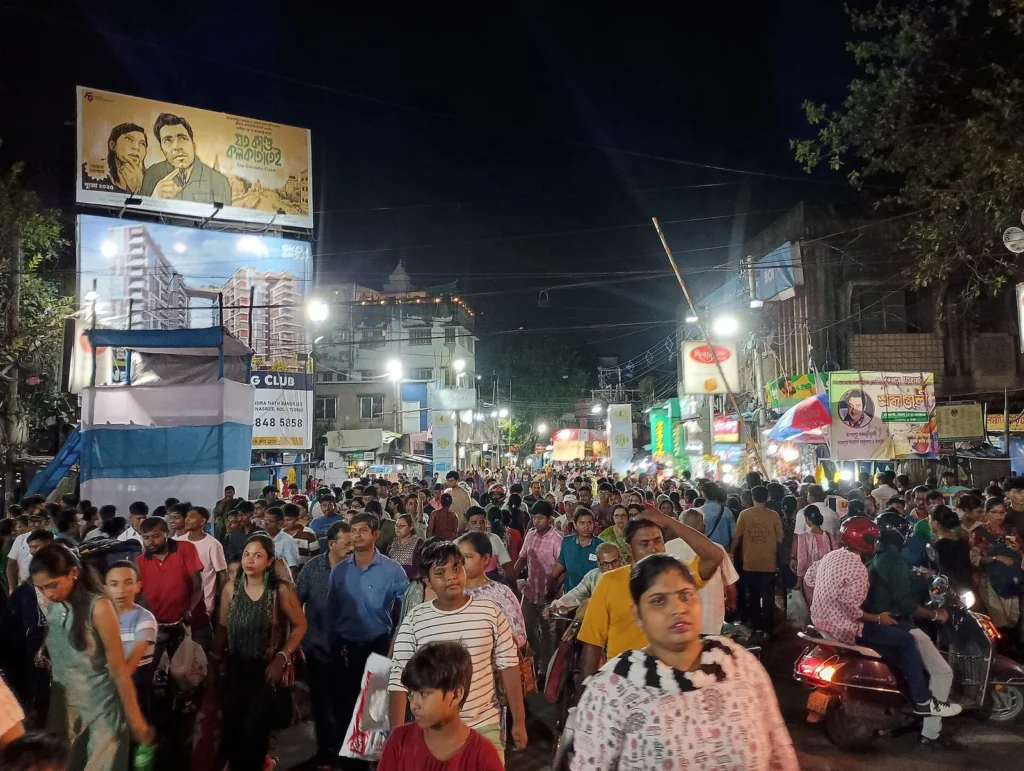
South Kolkata has a large share of the themed pandals, and the crowds here are heavy on the main nights. The pujas cluster around a few metro stations on the Blue Line, from Jatin Das Park and Kalighat to Rabindra Sarobar.
- Deshapriya Park, Tridhara Sammilani and Hindustan Park: close together near Rashbehari Avenue.
- Ekdalia Evergreen and Singhi Park: in the Ballygunge and Gariahat area.
- Suruchi Sangha and Chetla Agrani Club: in New Alipore and Chetla.
- Badamtala Ashar Sangha and 66 Pally: near Kalighat.
- Behala: a string of pujas along the main road, with very large evening crowds.
From Bagbazar in the north to Deshapriya Park in the south is about 11 km by road, so treat North and South Kolkata as separate evenings.
Salt Lake and Lake Town pujas
East of the old city, Salt Lake (Bidhannagar) has block-based pujas such as FD Block and BJ Block, and Lake Town has Sreebhumi Sporting Club. These areas are closer to the airport, which is about 15 km by road from Bagbazar.
The sound of the puja: dhak and dhakis
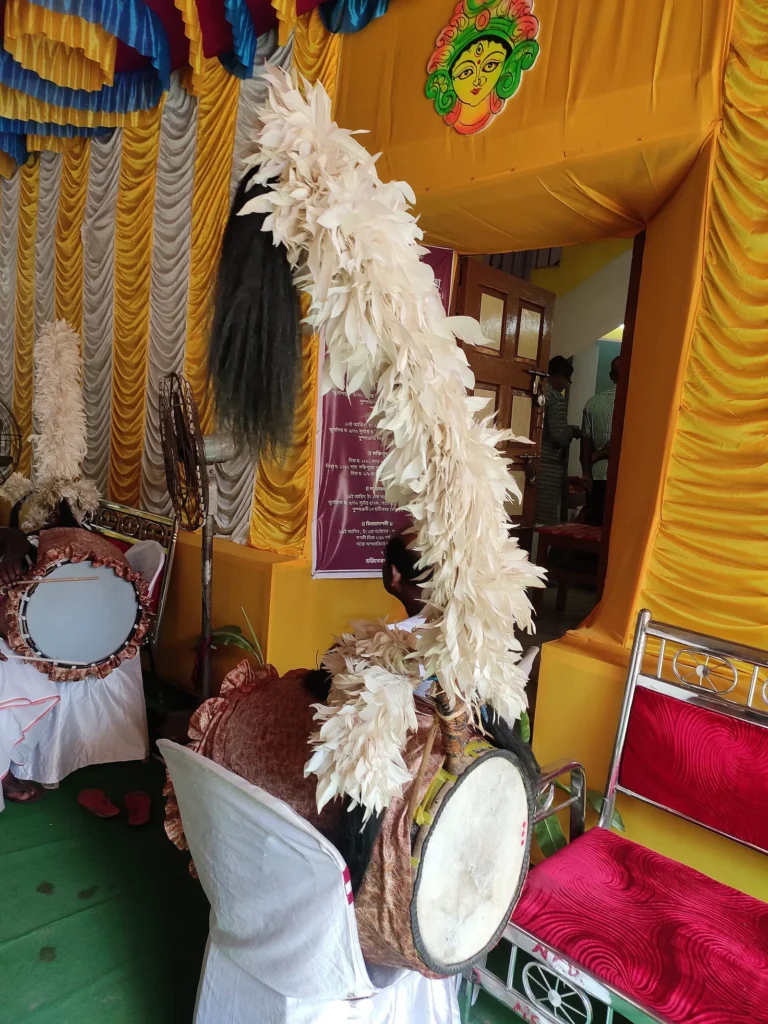
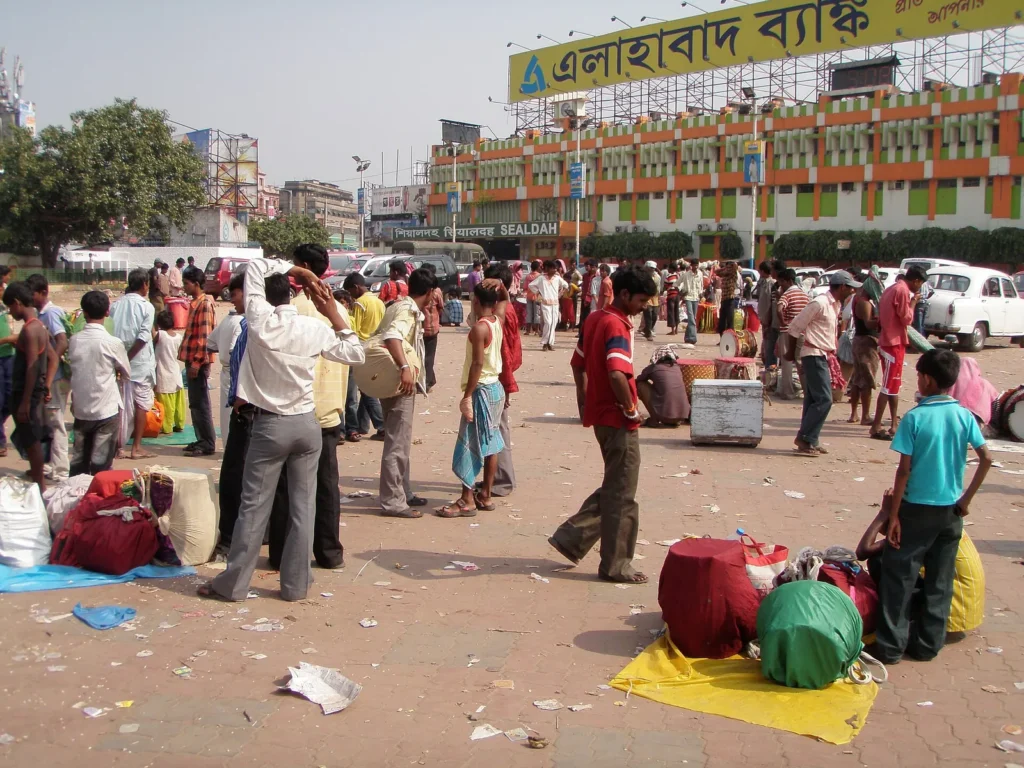
The dhak, a large barrel drum, is the sound of Durga Puja. Drummers called dhakis travel to Kolkata from rural Bengal for the festival, and before the puja they gather outside Sealdah station, where committees come to hire them. During the puja, the dhak marks the rituals at each pandal, and the dhunuchi dance, with clay incense burners, takes place to its beat.
Dashami: sindoor khela and immersion
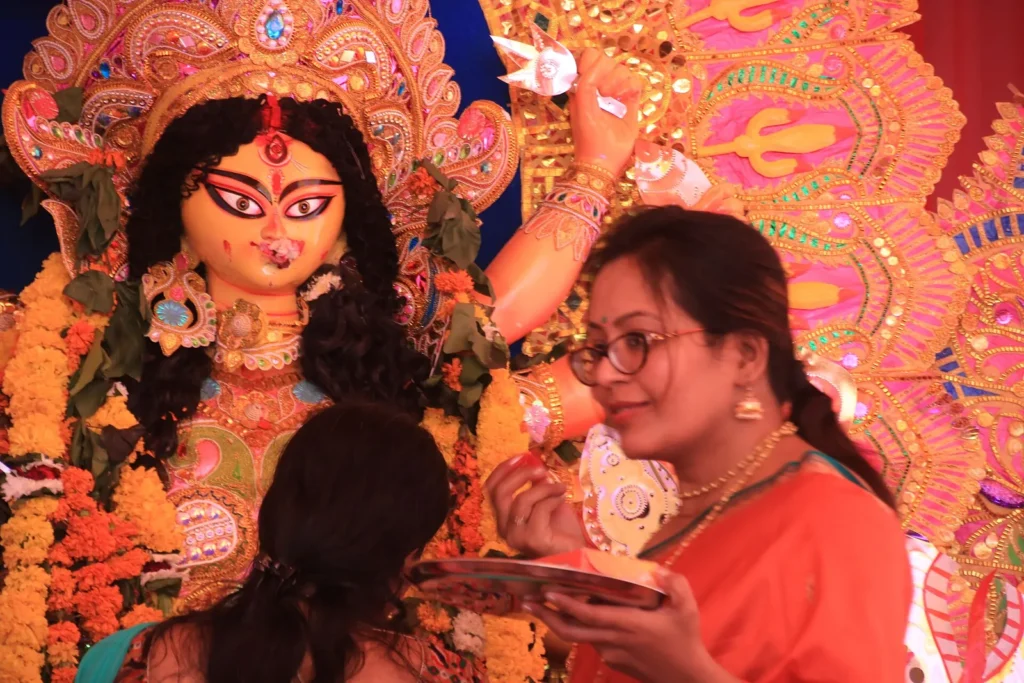
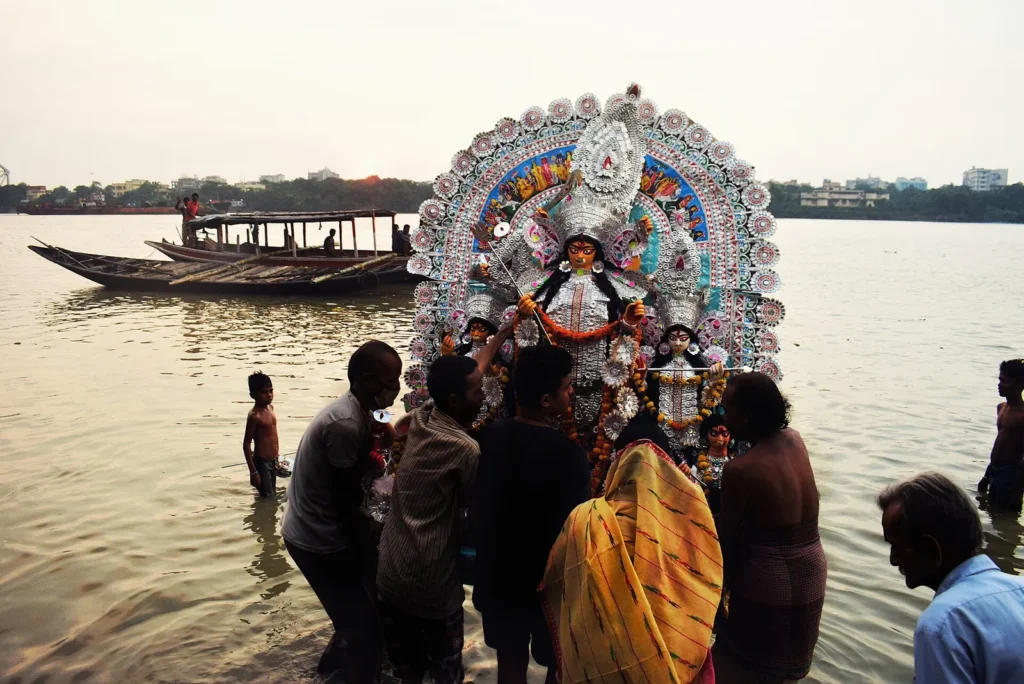
On Dashami, the last day, married women smear each other with sindoor (vermilion) in sindoor khela after offering sweets to the goddess. Then the images are taken to the ghats on the Hooghly for immersion. UNESCO’s description links this to the clay itself, which returns to the river it came from.
The state government also holds a Durga Puja Carnival on Red Road after the puja, where selected committees parade their images.
How to plan your pandal hopping
- Pick one cluster per evening: North Kolkata one night, South Kolkata another, and Salt Lake or Lake Town on a third.
- Start in the afternoon if you can. Queues at the big pandals grow after dark and through the night.
- Use the metro for longer hops. Roads near big pandals close to traffic in the evening, and cabs get stuck.
- Wear comfortable shoes and carry water. Expect to walk several kilometres in a night.
- Keep your phone and wallet in a front pocket or bag; the crowds are dense.
- Fix a meeting point with your group in case you get separated.
- Visit Kumartuli before the festival and the big pandals on weekday afternoons for thinner crowds.
Where to stay
Book early. Hotels in central Kolkata, around Park Street, Esplanade and Sealdah, put you within reach of both clusters by metro. Staying near a Blue Line station is the most useful choice, because the line links North and South Kolkata.
Combining the puja with Kolkata sights
If you have extra days, see the city’s landmarks before or after the puja. Our guide to places to visit in Kolkata is a good start. The Howrah Bridge and Prinsep Ghat are close to the river where the immersions happen, and the Botanical Garden makes a quiet morning away from the crowds. In New Town, the Biswa Bangla Gate is near the airport side of the city.
FAQ
When is Durga Puja in 2027?
Almanac sites put Shashthi around 5 October 2027, with Dashami a few days later. The sources differ on the exact later dates, so confirm with the West Bengal government holiday list.
Which is the best day for pandal hopping in Kolkata?
Saptami, Ashtami and Navami are the main nights, and they are also the most crowded. For thinner crowds, go on Shashthi or in the afternoon.
Is North or South Kolkata better for pandals?
They differ. North Kolkata has the older, traditional pujas and Kumartuli. South Kolkata has more of the large themed pandals. Spend one evening on each.
Is Durga Puja in Kolkata a UNESCO heritage?
Yes. UNESCO inscribed “Durga Puja in Kolkata” on the Representative List of the Intangible Cultural Heritage of Humanity in 2021.
When should I visit Kumartuli?
Before the festival, when the workshops are finishing the images. By the puja days the finished images have gone to the pandals.
How do I get around during Durga Puja?
Use the Kolkata Metro for longer distances and walk within each cluster. Roads near big pandals close to traffic in the evening.
Official resources: Durga Puja in Kolkata, UNESCO Intangible Cultural Heritage; Decision 16.COM 8.b.15, UNESCO; Kolkata Metro
Photo credits
Featured image: Auli Raha (অলি রাহা) / Wikimedia Commons, CC BY-SA 4.0; What Durga Puja in Kolkata is: Pramanikshreya / Wikimedia Commons, CC BY-SA 4.0; North Kolkata pandals: Tarunsamanta / Wikimedia Commons, CC BY-SA 4.0; North Kolkata pandals: Subhrajyoti07 / Wikimedia Commons, CC BY-SA 4.0; Kumartuli, the idol makers’ quarter: Yooktashree barai / Wikimedia Commons, CC BY-SA 4.0; Kumartuli, the idol makers’ quarter: Pritviswa / Wikimedia Commons, CC BY-SA 4.0; South Kolkata pandals: Biswarup Ganguly / Wikimedia Commons, CC BY 3.0; South Kolkata pandals: Snehangshu36 / Wikimedia Commons, CC BY-SA 4.0; The sound of the puja: dhak and dhakis: Sumita Roy Dutta / Wikimedia Commons, CC BY-SA 4.0; The sound of the puja: dhak and dhakis: Biswarup Ganguly / Wikimedia Commons, CC BY 3.0; Dashami: sindoor khela and immersion: Ramesh Lalwani / Wikimedia Commons, CC BY 2.0; Dashami: sindoor khela and immersion: Ritankar Mazumder / Wikimedia Commons, CC BY-SA 4.0.


