
Jibhi is a small village in the Banjar area of Kullu district in Himachal Pradesh, set in deodar forest below Jalori pass. It shares the Banjar valley with the Tirthan valley next door, which is the western gateway to the Great Himalayan National Park, a UNESCO World Heritage Site. Most people come for a few slow days: a waterfall walk, an old wooden tower, the drive up to Jalori and the forest trail to Serolsar lake. This guide covers how to get there, what to do, the weather through the year and where to stay.
Know before you go
- Where: Banjar area, Kullu district, Himachal Pradesh.
- Turn-off: Aut, on the Chandigarh to Manali highway.
- Nearest airport: Bhuntar (Kullu Manali airport).
- Big day trips: Jalori pass, Serolsar lake, Chehni Kothi, Tirthan valley.
- Best months: spring and autumn; Jalori is usually snowbound in winter.
- Last checked: 5 November 2026.
In this Article
Jibhi, Himachal Pradesh at a glance
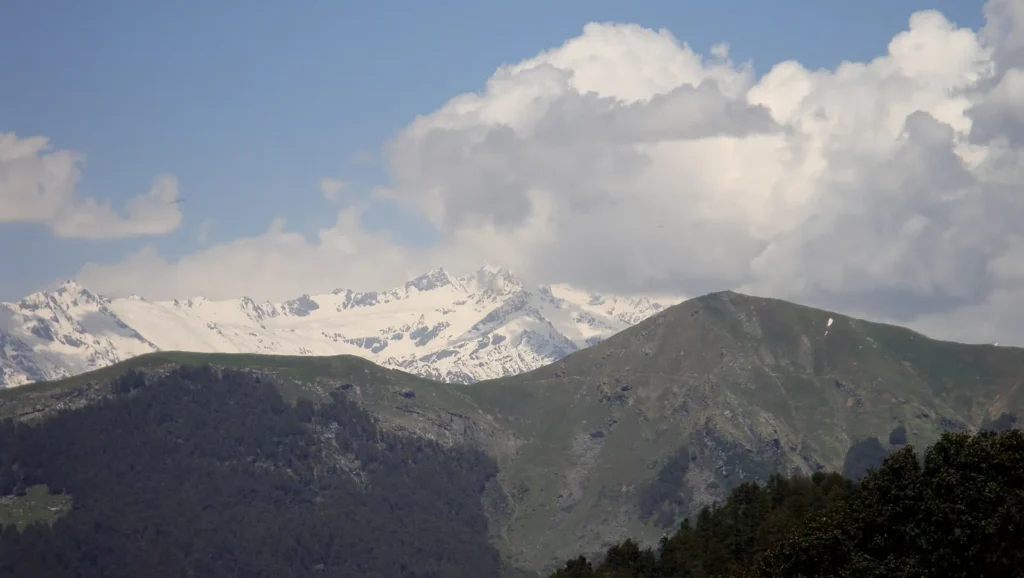
Jibhi sits on a stream that runs down from Jalori pass towards Banjar town. The village and its neighbours have turned into a base of homestays, small cottages and cafes, but the setting is still forest, orchards and old wooden houses.
The Tirthan valley branches off close by. Its main village, Gushaini, is the roadhead for treks into the Great Himalayan National Park (GHNP). The two valleys are close enough that most visitors see both on one trip.
The Himachal trekking portal suggests a simple five day plan for the area:
- Reach Banjar or Jibhi and visit Chehni Kothi.
- Take a day trip to Jalori pass.
- Visit Gushaini and the villages nearby.
- Explore the Great Himalayan National Park.
- Go trout fishing and relax.
That order works well. Use it as a starting point and add rest days as you like.
How to reach Jibhi
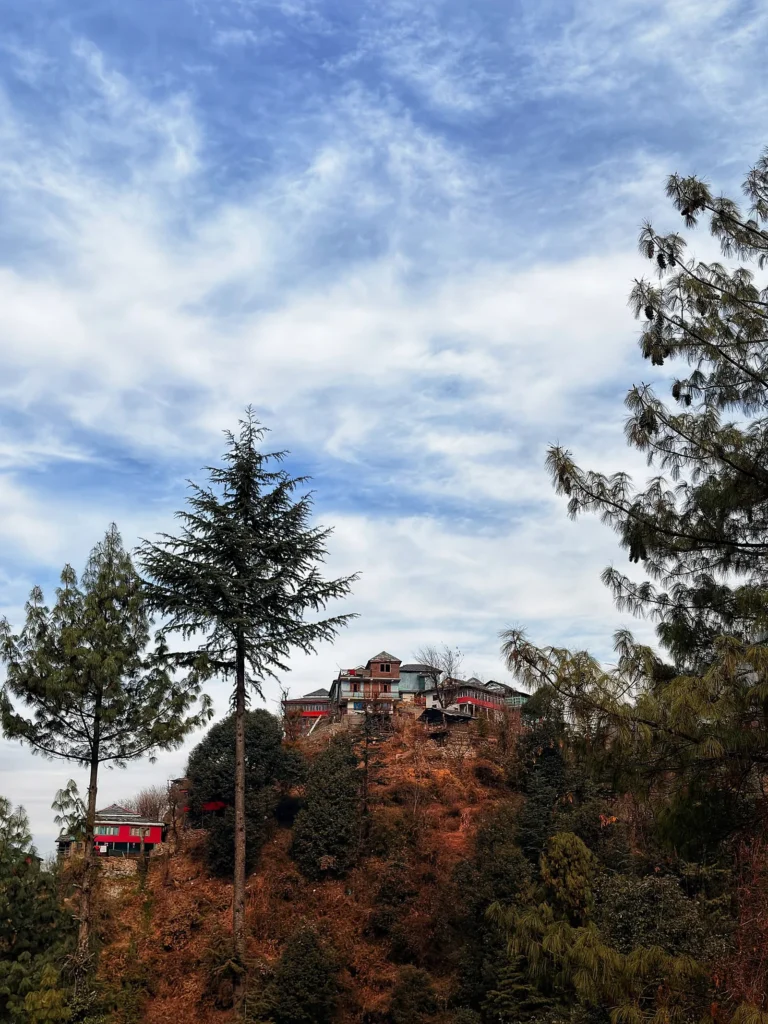
Every road route meets at Aut, a small town on the Chandigarh to Manali highway in Mandi district. From Aut a link road crosses the Beas and climbs into the Banjar valley. The GHNP site gives these road distances from major towns to the park area:
| From | Approx. distance | Approx. time | Route |
|---|---|---|---|
| Delhi | 480 km | 10 to 12 hours | Ambala, Chandigarh, Bilaspur, Mandi, Aut |
| Shimla | 185 km | 6 to 8 hours | Sundernagar, Mandi, Aut |
| Dharamsala | 170 km | 6 to 8 hours | Palampur, Joginder Nagar, Mandi, Aut |
| Manali | 70 km | 2 to 3 hours | Kullu, Aut |
From Aut, local buses and taxis run up to Banjar, and from Banjar on to Jibhi. Overnight buses from Delhi towards Manali pass Aut, so ask to be dropped at the tunnel junction.
By air, the nearest airport is Bhuntar, about 50 km from the park area. By train, Chandigarh is the closest major station, nearly 300 km away. A slower option is the narrow gauge line from Pathankot to Joginder Nagar, then a road trip to Aut.
If you are coming from Shimla, there is also the high road over Jalori pass from the Narkanda side, which drops straight into Jibhi. It is a narrow mountain road and closes in winter snow.
Things to do in Jibhi
Jibhi waterfall
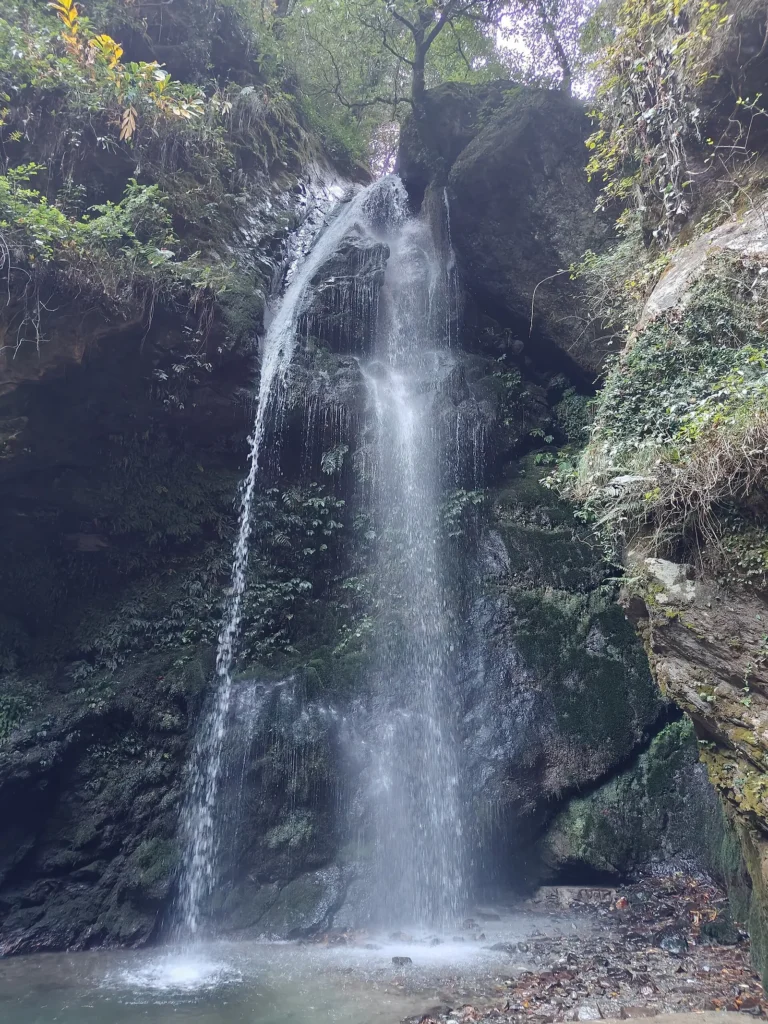
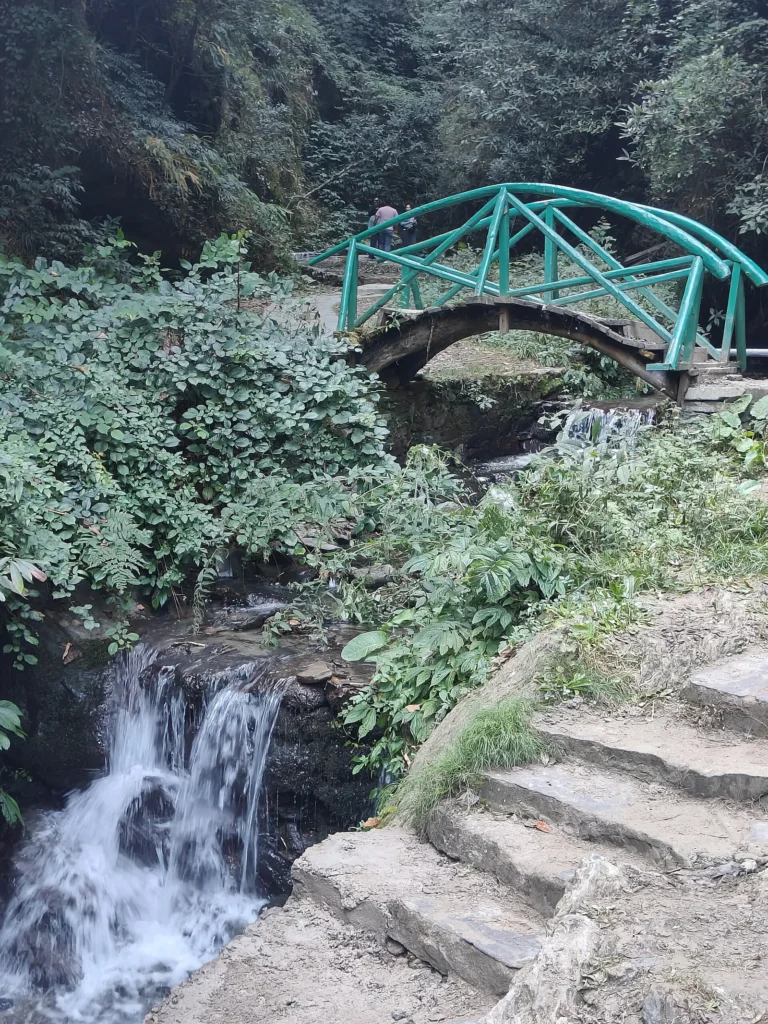
Jibhi waterfall is the village’s best known stop. A short path leads from the main road through the trees and across a small footbridge to a pool under a mossy rock face. Indiahikes puts it about 1 km from the Jibhi market. It is a pleasant half hour outing rather than a big sight, and it gets busy on weekends in summer.
Take care on the wet rocks. Floods in 2023 damaged a bridge at the falls, so check which path is open locally.
Chehni Kothi
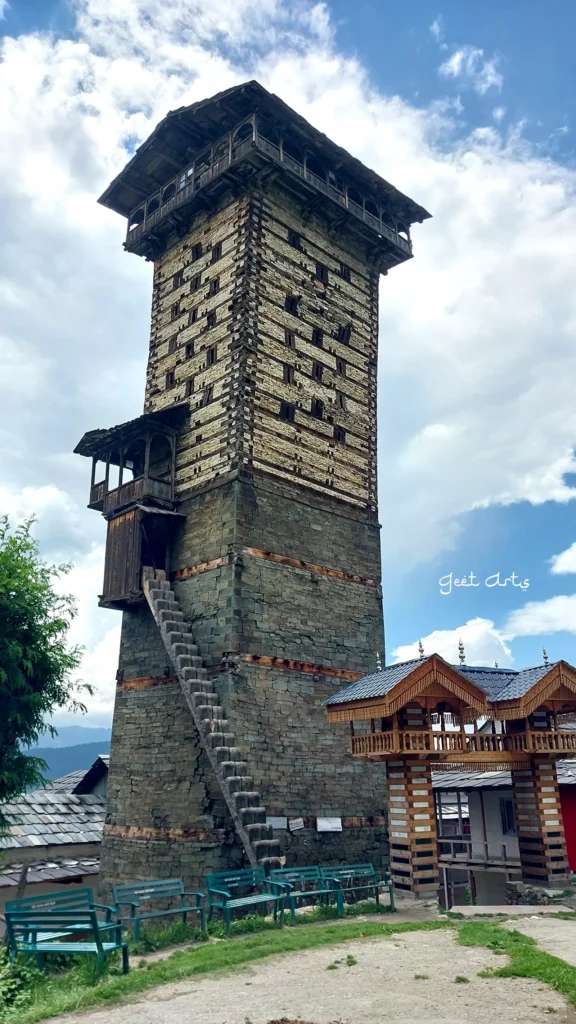
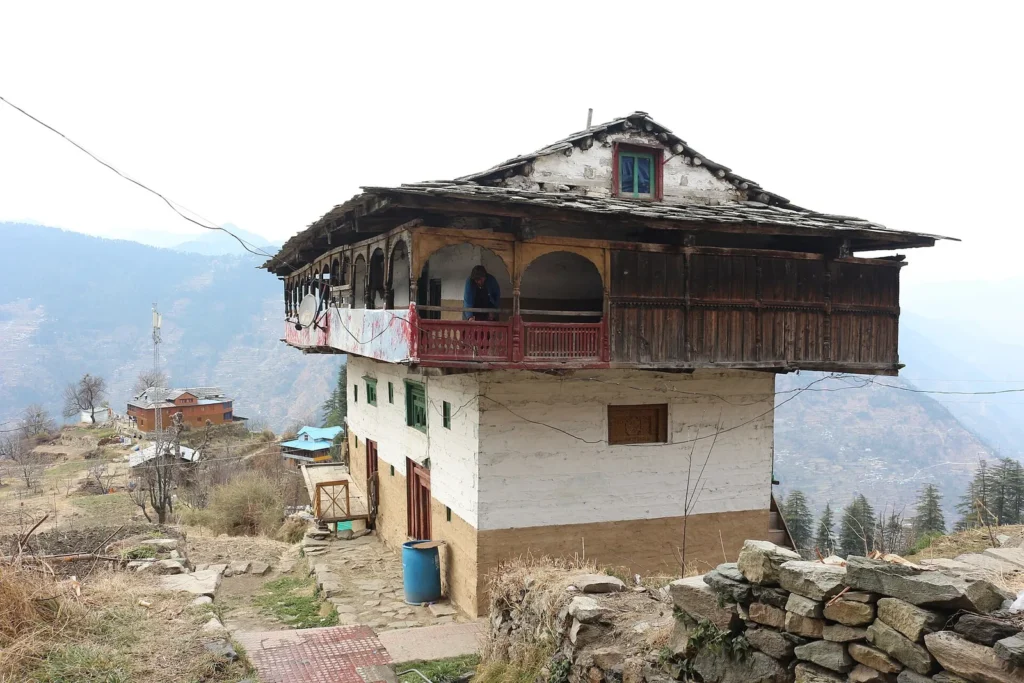
Chehni Kothi is an old tower of alternating stone and timber that rises above Chehni village, a short drive and an uphill walk from Jibhi. It is a good example of kath kuni building, the local method of laying wood and stone in layers. The walk up goes through fields and small houses, and the view from the top takes in the whole Banjar valley.
Dress modestly near the temple area and ask before photographing people.
Jalori pass
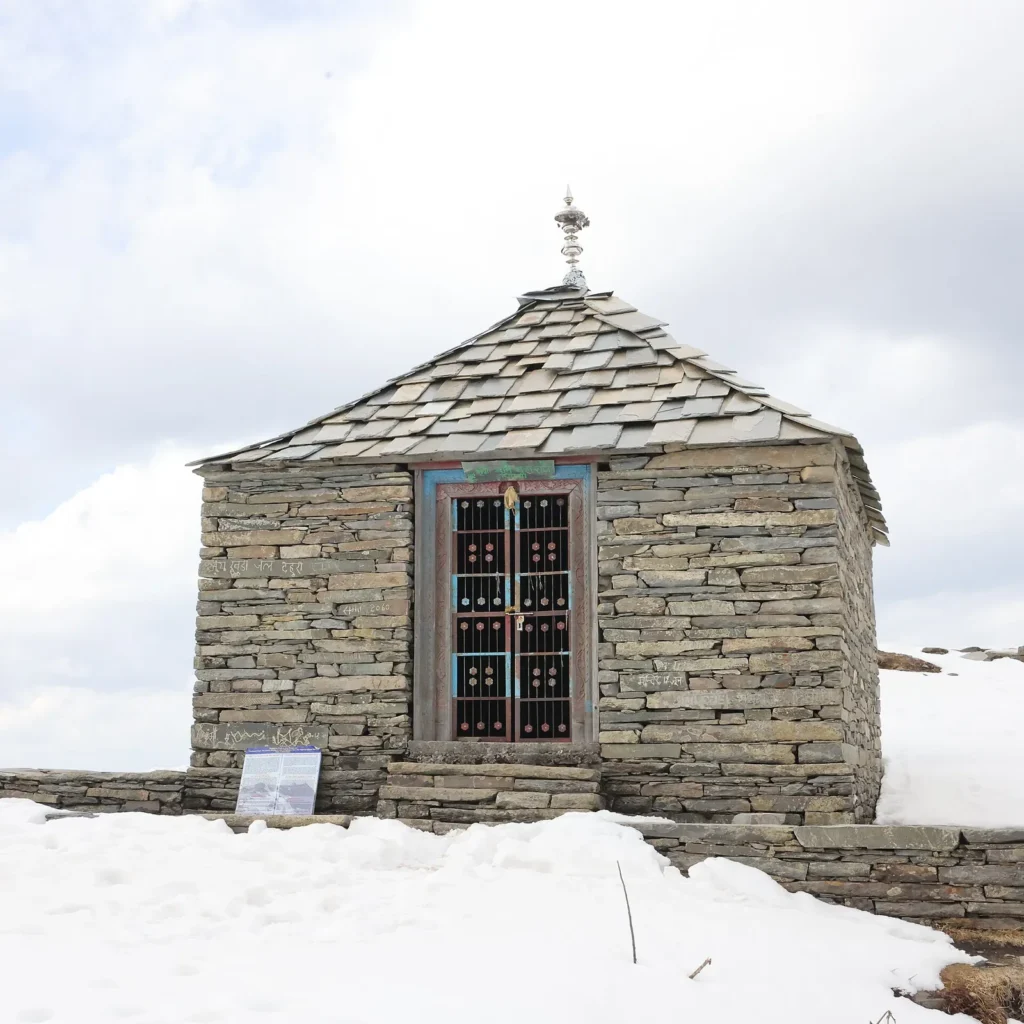
Jalori pass is the high road between the Kullu side and the Shimla side of the range, at roughly 3,120 m. It sits above Jibhi and Shoja, and the drive up is steep with tight bends. At the top there is a small temple to Jalori Mata, a few tea stalls and wide views north to the snow peaks.
Snow usually closes the pass for a few months in winter. In spring the road reopens once it is cleared, so check road status in Banjar or Jibhi before driving up.
Serolsar lake trek
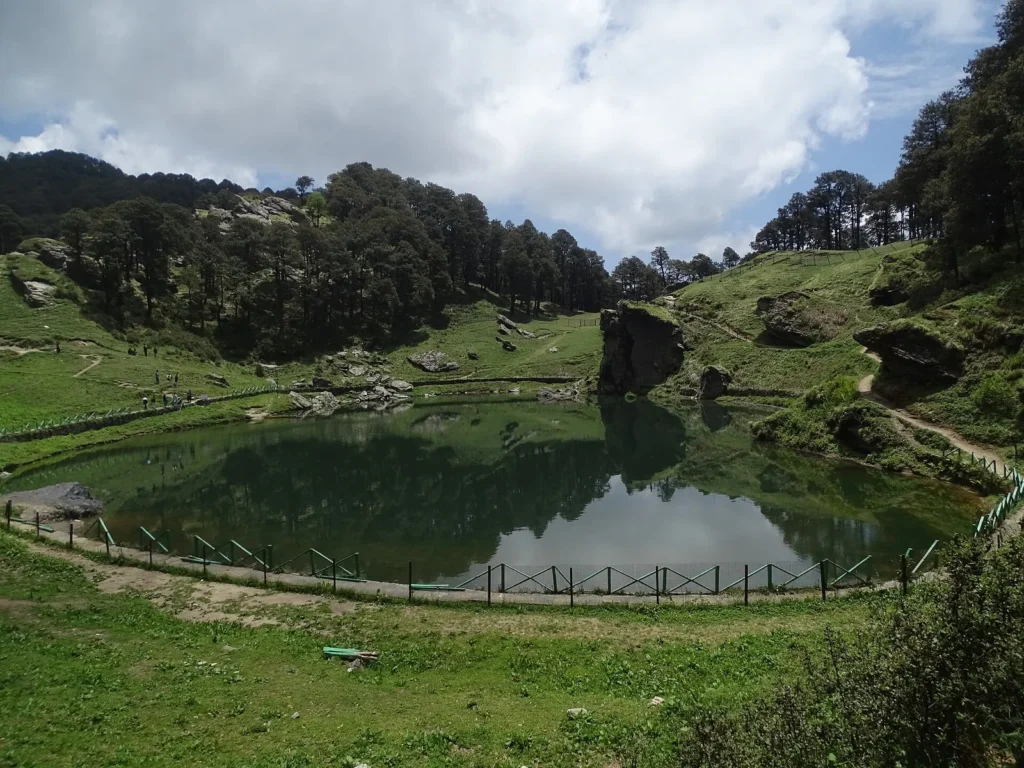
From Jalori pass, a forest trail runs east to Serolsar lake. Indiahikes describes it as an easy trek of about 5 km each way through pine and deodar, with a short steep detour to a viewpoint. The lake is small and fenced, with the Budhi Nagin temple on the shore. Locals regard the lake as sacred, so do not touch the water.
A few points to plan around:
- No permit is needed for this trail.
- Camping is not allowed near the lake itself.
- Carry at least 2 litres of water per person, since there is no reliable source before the lake.
- Start early and aim to be back at the pass well before dark.
Raghupur fort
On the opposite side of Jalori pass, a walk west leads up to the ruins of Raghupur fort on an open ridge. Little of the fort remains, but the meadow and the views make it a good shorter alternative to Serolsar.
Jibhi and Tirthan valley
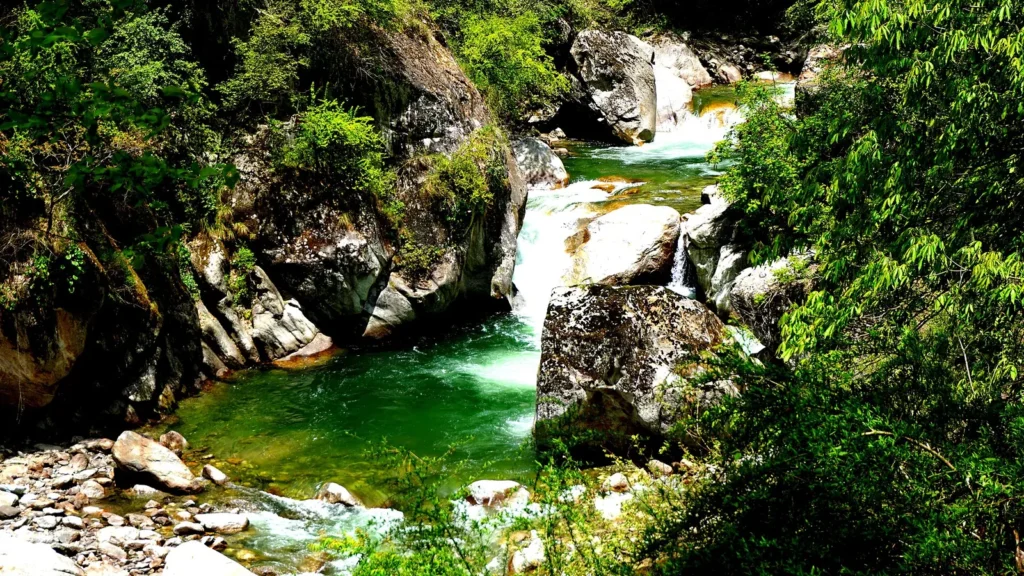
The Tirthan valley is the other half of the trip. The Tirthan river is known for trout, and the valley has homestays along the water near Gushaini. A Forest Rest House at Sai Ropa is listed on the state trekking portal.
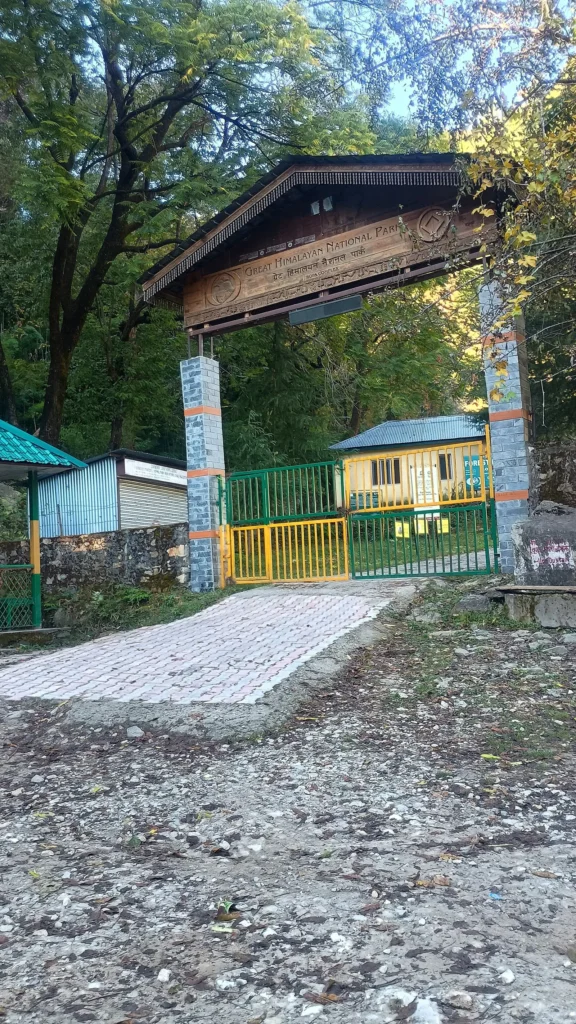
The Great Himalayan National Park begins beyond Gushaini. The park site sets out clear rules:
- Entry into the park is by permit only.
- Permits come from the head office in Shamshi or the range offices at Sai Ropa (Tirthan) and Ropa (Sainj).
- Trek routes must be approved by a range officer before you enter.
- Multi-day trekkers must hire certified guides and porters.
- Hunting and fishing are banned inside the park, and open fires are not allowed.
Fees change, and the park site asks visitors to check the latest rates with park staff. Short walks in the villages outside the park boundary need no permit.
Jibhi weather and temperature by season
There is no official month by month temperature table for Jibhi, so treat this as a general guide. The village is in the mid hills, and nights are cool for most of the year.
| Season | What to expect |
|---|---|
| March to June | Mild days and cool nights. Good for walks, Jalori and Serolsar once the road is open. |
| July to September | Monsoon rain, leeches on forest trails and a risk of landslides on the roads. |
| October to November | Clear skies, crisp days and cold nights. One of the best times to go. |
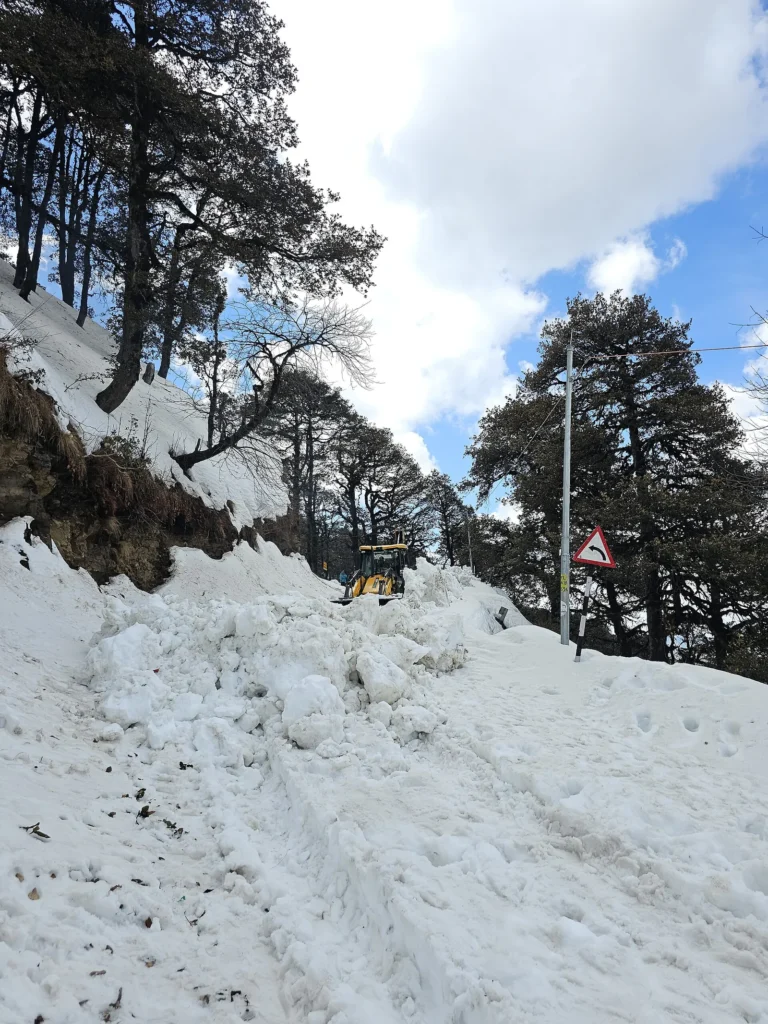
| December to February | Cold, with snow at times in Jibhi and heavy snow on Jalori. |
The state trekking portal lists the Tirthan trek season as May to October. For snow, plan a winter stay but expect the pass to be closed.
Where to stay in Jibhi
Stays in the area fall into a few types:
- Homestays in old village houses, often with home cooked meals.
- Cottages and wooden cabins along the Jibhi stream and around Shoja.
- Riverside homestays in the Tirthan valley near Gushaini, good for walks and fishing.
- The Forest Rest House at Sai Ropa, which suits trekkers heading into GHNP.
Jibhi suits people who want cafes and a longer stay. Tirthan is quieter and closer to the park. A simple split is two nights in Jibhi for Jalori and Serolsar, then two nights near Gushaini for the river.
Practical tips
- Carry enough cash from Banjar, since ATMs in the smaller villages can be unreliable.
- Use low gear on the Jalori descent.
- Pack layers even in summer, as evenings at the pass get cold fast.
- Take all plastic back with you. Polythene is banned in Himachal Pradesh.
- Do not take selfies on river banks or near fast water.
For more of Himachal, see our Shimla Manali itinerary, the guide to Shimla, Manali and the Atal tunnel, the Kasol and Kheerganga trek guide and places to visit in McLeodganj.
FAQ
Where is Jibhi in Himachal?
Jibhi is in the Banjar area of Kullu district, below Jalori pass. The road in turns off the Chandigarh to Manali highway at Aut.
Is Jibhi in Himachal Pradesh worth visiting?
Yes, if you want a quiet base with forest walks, an old tower, a waterfall and an easy high altitude trek, plus access to the Tirthan valley and GHNP.
What is Jibhi weather like?
Spring and autumn are mild and pleasant, the monsoon is wet with landslide risk, and winter is cold with occasional snow.
How far is Jibhi waterfall from the village?
It is a short walk of about 1 km from the Jibhi market, ending at a small pool under a rock face.
Are Jibhi and Tirthan valley the same?
No. They are neighbouring valleys in the Banjar area. Jibhi leads up to Jalori pass, while Tirthan leads to Gushaini and the Great Himalayan National Park.
What is the Jibhi temperature in winter?
No official figures exist for Jibhi. Expect cold days and freezing nights from December to February, with snow at times.
Official resources: Great Himalayan National Park: how to reach; GHNP fees, rules and guidelines; Himachal trekking portal: Tirthan trek
Photo credits
Featured image: Prabhmeet Singh / Wikimedia Commons, CC BY-SA 4.0; Jibhi, Himachal Pradesh at a glance: Tanvi.sharmaaa / Wikimedia Commons, CC BY-SA 4.0; Jibhi waterfall: Rohan Pinto / Wikimedia Commons, CC BY-SA 4.0; Jibhi waterfall: Rohan Pinto / Wikimedia Commons, CC BY-SA 4.0; Chehni Kothi: Sukhjiwan Singh / Wikimedia Commons, CC BY-SA 4.0; Chehni Kothi: Banchida / Wikimedia Commons, CC BY-SA 4.0; Serolsar lake trek: Sukhjiwan Singh / Wikimedia Commons, CC BY-SA 4.0; Raghupur fort: Gannu03 / Wikimedia Commons, CC BY-SA 4.0; Jibhi and Tirthan valley: Vishrutpanday / Wikimedia Commons, CC BY-SA 4.0; Jibhi and Tirthan valley: Rajani Gairshail / Wikimedia Commons, CC BY-SA 4.0; Jibhi weather and temperature by season: Gannu03 / Wikimedia Commons, CC BY-SA 4.0.


