Tokyo is easiest to enjoy when you group the sights by neighbourhood instead of crossing the city several times a day. The old temple district of Asakusa, the forest shrine at Meiji Jingu, the observation towers and the big crossings can each fill half a day. This list covers the main things to do in Tokyo, with the hours and prices we could check on official sites in November 2026, and a few notes on how to fit them together.
Know before you go
- Best for: a first visit of 3 to 5 days.
- Oldest temple: Senso-ji in Asakusa.
- Free sight: Meiji Jingu, open every day, no admission charge.
- Skytree decks: 350 m and 450 m, adult tickets from JPY 3,000.
- Tokyo Tower: 333 m tall, main deck at 150 m.
- Planning help: see our Japan itinerary for 7 days.
- Last checked: 6 November 2026.

In this guide
Temples and shrines
Senso-ji and Asakusa
Senso-ji is the oldest temple in Tokyo. The temple’s own site says it draws about 30 million worshippers every year, and it is dedicated to Kannon, the bodhisattva of compassion. According to the temple’s history, two brothers fishing in the Sumida River in 628 pulled up a statue of Kannon in their net, and the temple grew from that story. The statue itself has never been shown to the public.
Most visitors walk in through the Kaminarimon gate and along Nakamise, one of the oldest shopping streets in Japan, where stalls sell sweets, toys and souvenirs. Allow one to two hours. Go early or in the evening if you dislike crowds, since the street fills quickly during the day.
Meiji Jingu
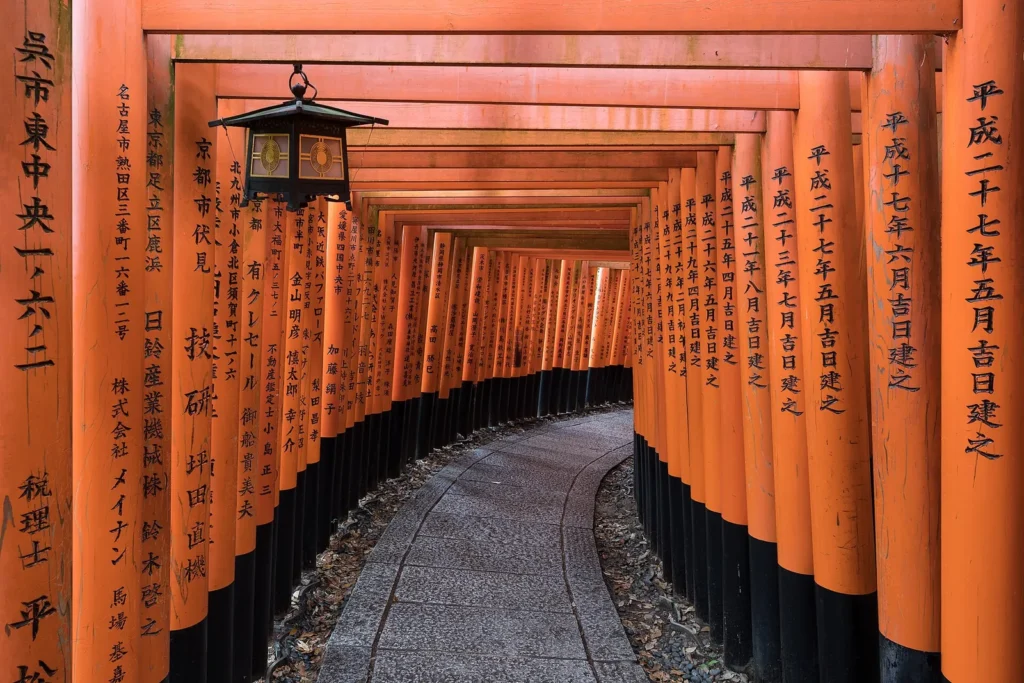
Meiji Jingu sits in a forest next to Harajuku and Shibuya. The official site says it is open every day of the year, free of charge, and that it opens at sunrise and closes at sunset. The hours therefore shift through the year. In November the gates open at 6:10 am and close at 4:10 pm, and in December the hours are 6:40 am to 4:00 pm. Some facilities inside keep shorter hours, mainly 9:00 am to 4:00 pm.
The long gravel path under tall trees is the main part of the visit, and it takes about an hour to walk in and out at an easy pace. It pairs well with a walk through Harajuku afterwards.

Towers and views
Tokyo Skytree
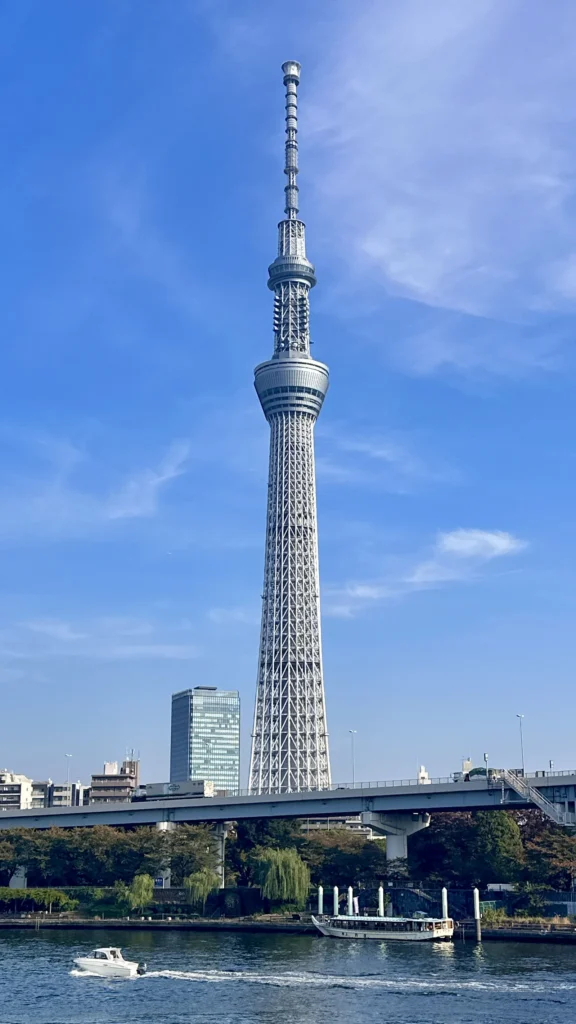
Tokyo Skytree has two observation levels, at 350 m and 450 m. On the official ticket page, the admission ticket for both the Tembo Deck and the Tembo Galleria starts from JPY 3,000 for adults aged 15 and over and from JPY 1,500 for children aged 6 to 14. Children aged 5 and under enter free. The prices shown are starting prices, and the price on the day depends on the date and on whether you reserve online. Buying at the ticket counter or a machine on the 4th floor adds a service fee of JPY 500 per ticket, according to the same page.
Tokyo Tower
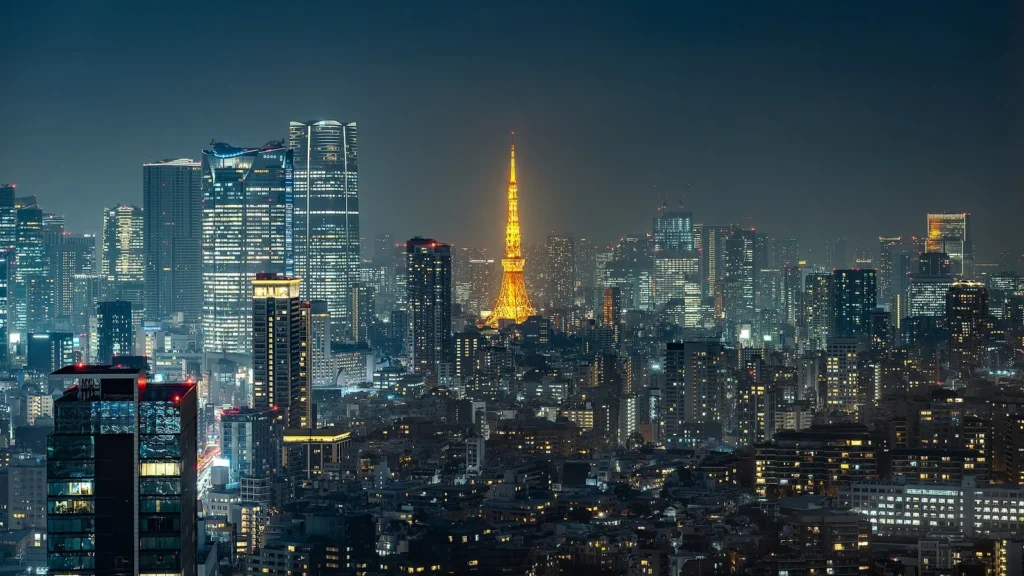
Tokyo Tower is 333 m tall. On the official page for 6 November 2026, the main deck at 150 m was open from 9:00 am to 11:00 pm, with last entry at 10:30 pm, and the Top Deck Tour to 250 m ran from 9:00 am to 10:45 pm, with last entry at 10:15 pm. Hours change by day, so check the page before you go. The tower is lit in the evening, and from the main deck at night you can see the city lights spread out in every direction.
Skytree and Tokyo Tower both work as a single evening stop. If you only want one, Skytree is higher and Tokyo Tower is closer to the centre and to Roppongi and Shiba Park.
City life and food
Shibuya Crossing
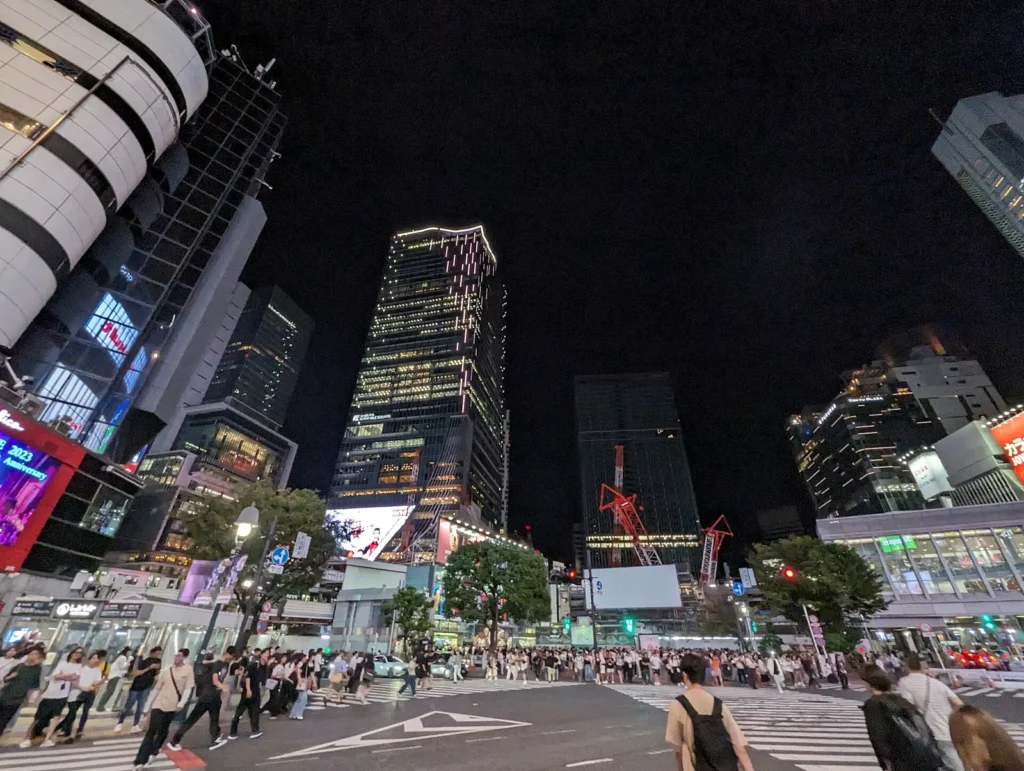
Shibuya Crossing is a scramble intersection where pedestrians cross in all directions at once when the lights change. It is free, and watching it takes ten minutes. Buildings around the station, such as Shibuya Stream and Shibuya Scramble Square, have raised viewpoints and cafes that look down on it.
Tsukiji Outer Market
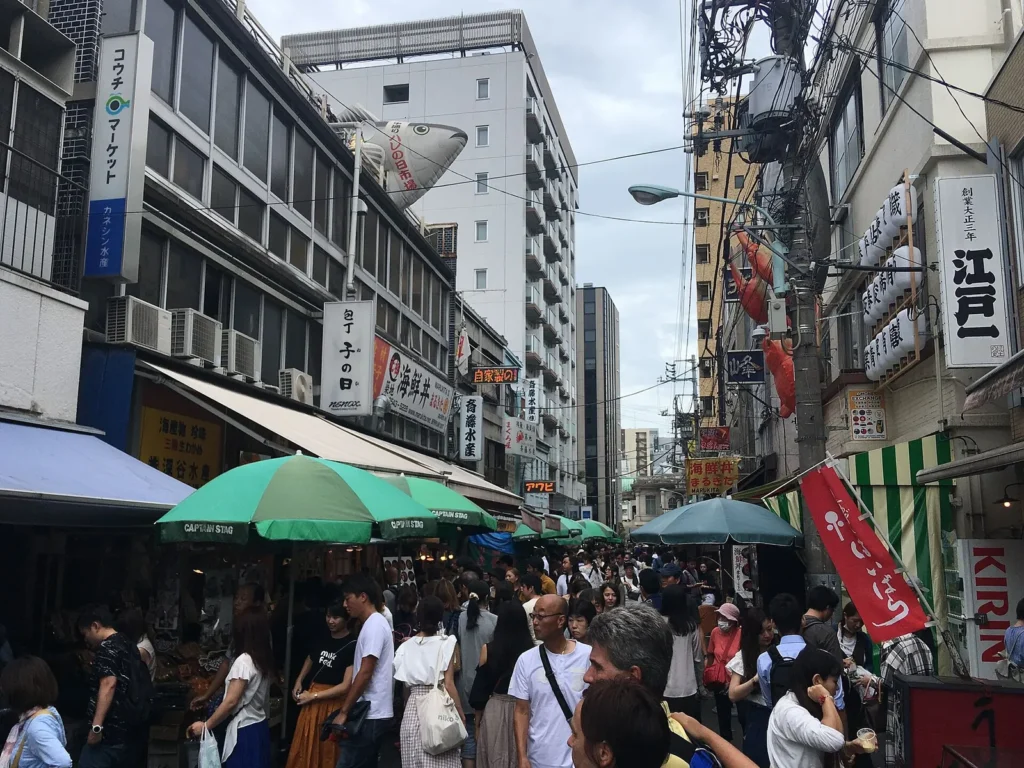
The inner wholesale fish market moved out of Tsukiji, but the outer market keeps its streets of food stalls and small restaurants. It is best as a breakfast or early lunch stop. Many stalls sell small portions, so you can sample a few things instead of ordering a full meal.
Parks and slower hours
Shinjuku Gyoen
Shinjuku Gyoen is a large garden near Shinjuku Station with lawns, ponds and wooden bridges. It is a good break between busier areas. Check its current hours and fee on the official site before you go, since both can change by season.
Ueno Park
Ueno Park holds several museums and a zoo, and Shinobazu Pond, where you can rent pedal swan boats. It makes a calm half day, and spring is the busiest season because of the cherry blossom picnics. Our guide to cherry blossom season in Japan explains when the trees bloom.


How to group the sights
A simple way to plan is by area:
- Asakusa and Ueno: Senso-ji, Nakamise, Ueno Park and Skytree.
- Harajuku, Shibuya and Shinjuku: Meiji Jingu, Shibuya Crossing and Shinjuku Gyoen.
- Minato and Tsukiji: Tokyo Tower and the outer market.
Tokyo trains are frequent, but changing lines across a big station can take ten minutes or more, so a day within one area is calmer than a day of long hops.
Planning the rest of your trip
Most visitors from India need a visa before they travel. See our Japan visa guide for Indians. For costs, our Japan trip cost from India post breaks the budget down, and the best time to visit Japan post helps pick your month.
FAQ
What are the best things to do in Tokyo for a first visit?
Senso-ji, Meiji Jingu, one observation tower (Skytree or Tokyo Tower), Shibuya Crossing and a food stop such as the Tsukiji outer market cover the classic first visit.
What are the free things to do in Tokyo?
Meiji Jingu has no admission charge, and watching Shibuya Crossing costs nothing either.
How many days do you need in Tokyo?
Three days covers the main sights above at an easy pace. Four or five days leave time for a day trip or a second round of neighbourhoods.
Is Tokyo Skytree or Tokyo Tower better?
Skytree is taller, with decks at 350 m and 450 m. Tokyo Tower is shorter at 333 m, with its main deck at 150 m, but it sits closer to the centre.
What are the things to do in Tokyo at night?
Tokyo Tower is open until 11:00 pm on its main deck, according to its official page. Shibuya Crossing also stays busy after dark.
Official resources: Senso-ji, Meiji Jingu, Tokyo Skytree, Tokyo Tower.
Photo credits
Featured image: Guilhem Vellut from Annecy, France / Wikimedia Commons, CC BY 2.0; Meiji Jingu: Hyppolyte de Saint-Rambert / Wikimedia Commons, CC BY-SA 4.0; Tokyo Tower: Akonnchiroll / Wikimedia Commons, CC0; Tokyo Tower: David Kernan / Wikimedia Commons, CC BY 4.0; Tsukiji Outer Market: Syced / Wikimedia Commons, CC0; Tsukiji Outer Market: Christophe95 / Wikimedia Commons, CC BY-SA 4.0; Ueno Park: Basile Morin / Wikimedia Commons, CC BY-SA 4.0; Ueno Park: Basile Morin / Wikimedia Commons, CC BY-SA 4.0.