
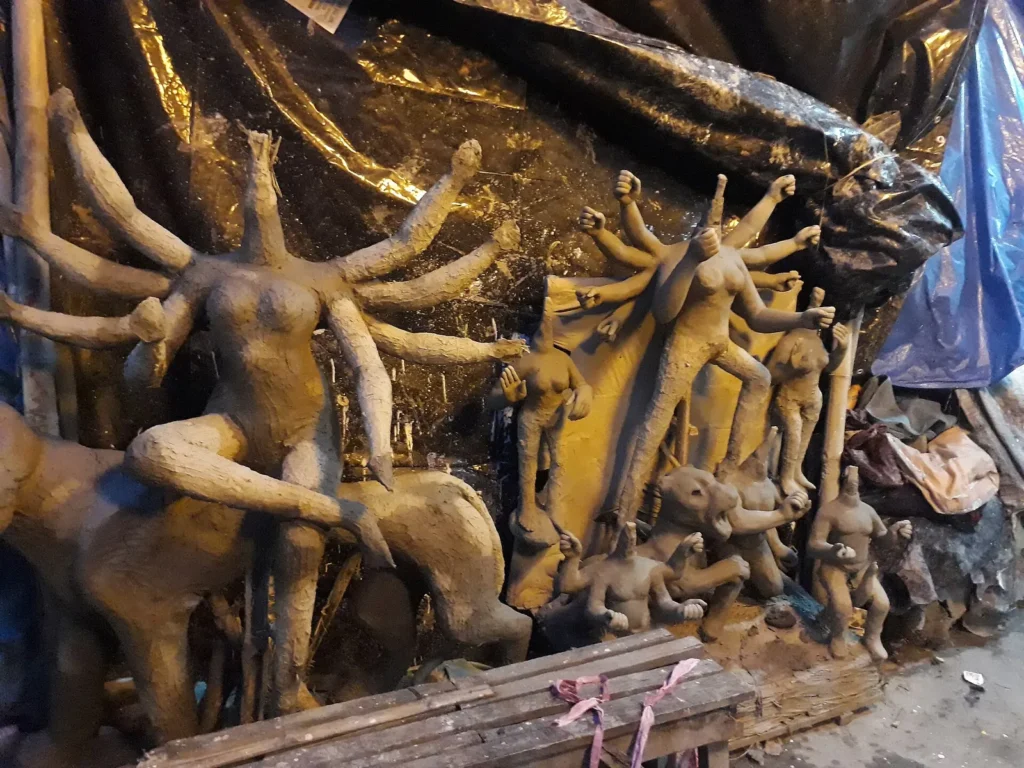
Kumartuli is a small grid of lanes in north Kolkata where clay idols of gods and goddesses are made by hand. In the weeks before Durga Puja the place fills with half-built figures of Durga, her children and the buffalo demon, in every stage from bare straw to painted and dressed. This guide covers when to go, how to get there and how to walk through the workshops without getting in the way.
Know before you go
- Where: North Kolkata, between Sovabazar and Ahiritola, by the Hooghly
- Entry: Free; it is a working neighbourhood, not a ticketed site
- Best months: July to early October for Durga idols at every stage
- Time needed: One to two hours on foot
- Nearest metro: Sovabazar Sutanuti on the Blue Line
In this Article
What Kumartuli is
The Kolkata Municipal Corporation describes Kumartuli as a warren of lanes home to artisans and potters who make the clay, straw and pith images of deities used for the major festivals. It is busiest in the days leading up to the big pujas, Durga Puja most of all. The KMC gives its location as Shovabazar Street.
The name comes from kumor, the Bengali word for potter. The quarter sits in the older northern part of the city, roughly between Rabindra Sarani (old Chitpur Road) and the river, with Sovabazar to the north and Ahiritola to the south.
A short history
The usual story ties Kumartuli to the Durga Puja of the old landed families. Raja Nabakrishna Deb of Sovabazar Rajbari is said to have started a Durga Puja at his mansion in 1757, and potters from Krishnanagar in Nadia came to make the idols. Other wealthy households followed, and a potters’ colony grew close to them on the riverbank.
Over time the customers changed. The big community pujas of the 20th century, run by neighbourhood clubs, needed more and bigger idols, and Kumartuli supplied them. Today idols also go abroad to Bengali communities who hold their own pujas, which is why some studios make lighter, smaller figures that can be shipped.
In 2021 UNESCO added Durga Puja in Kolkata to its list of the Intangible Cultural Heritage of Humanity. The inscription covers the whole festival, but the idol makers are a large part of it.
How an idol is made
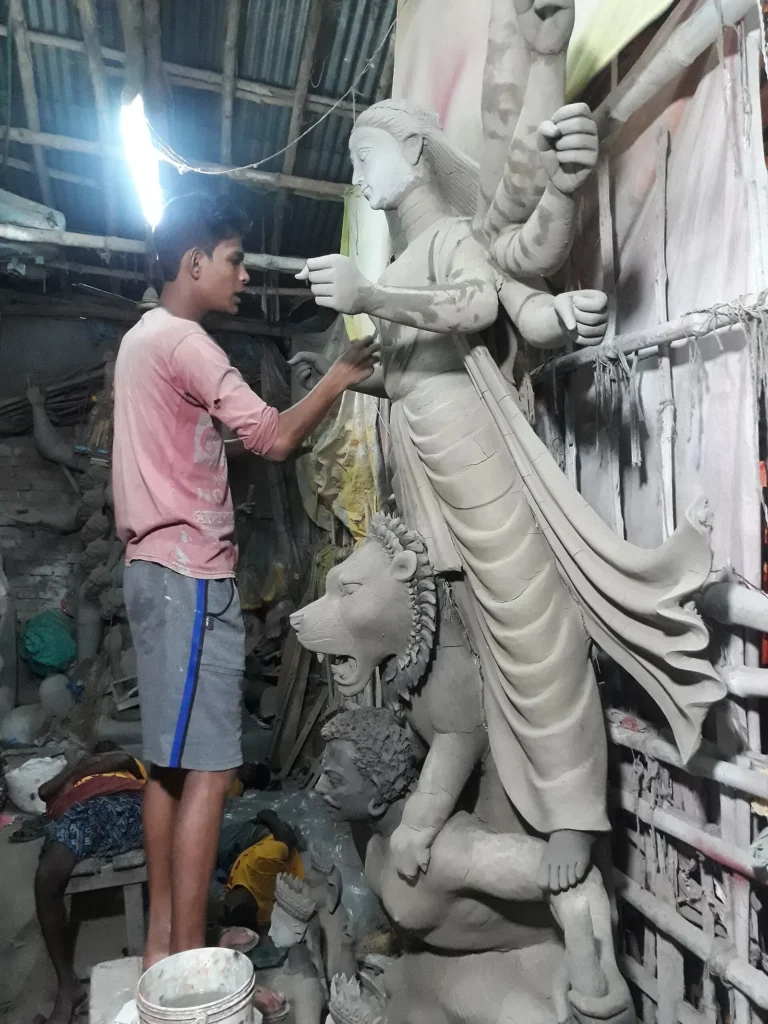
Walking the lanes makes more sense if you know the stages. Each workshop works on many idols at once, so you can often see several stages side by side.
- A bamboo frame is built and tied.
- Straw is bound onto the frame to give the rough body shape.
- Layers of clay go on. A sticky clay is used for the body and a finer one for the surface. Much of this clay comes by river from Uluberia, downstream of the city.
- Heads, hands and faces are often made separately, some from moulds.
- The idol dries, is smoothed and then painted.
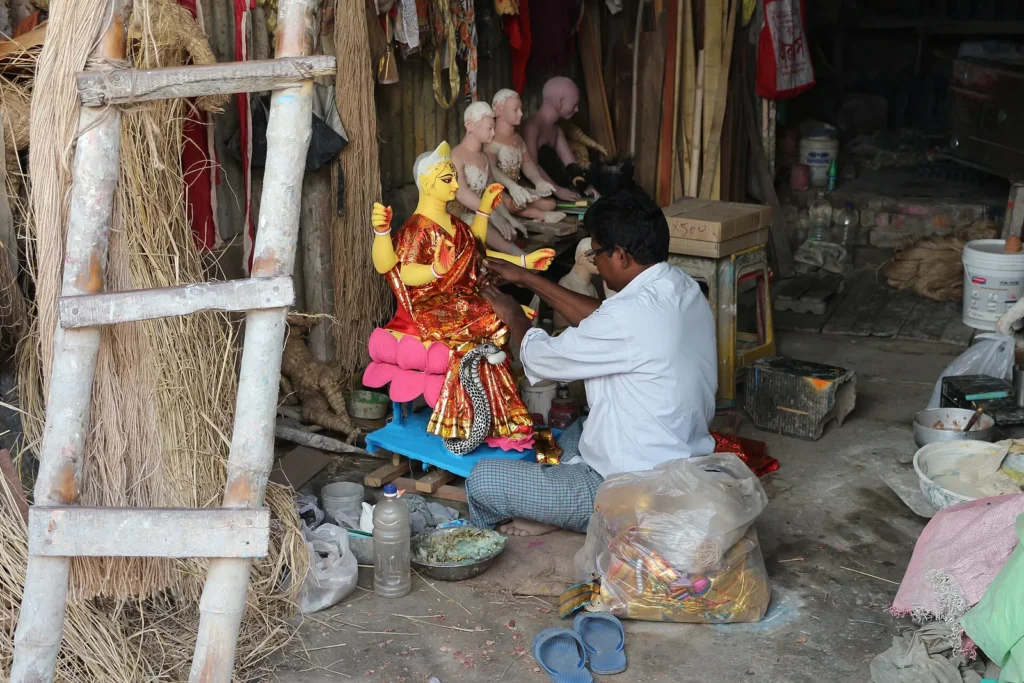
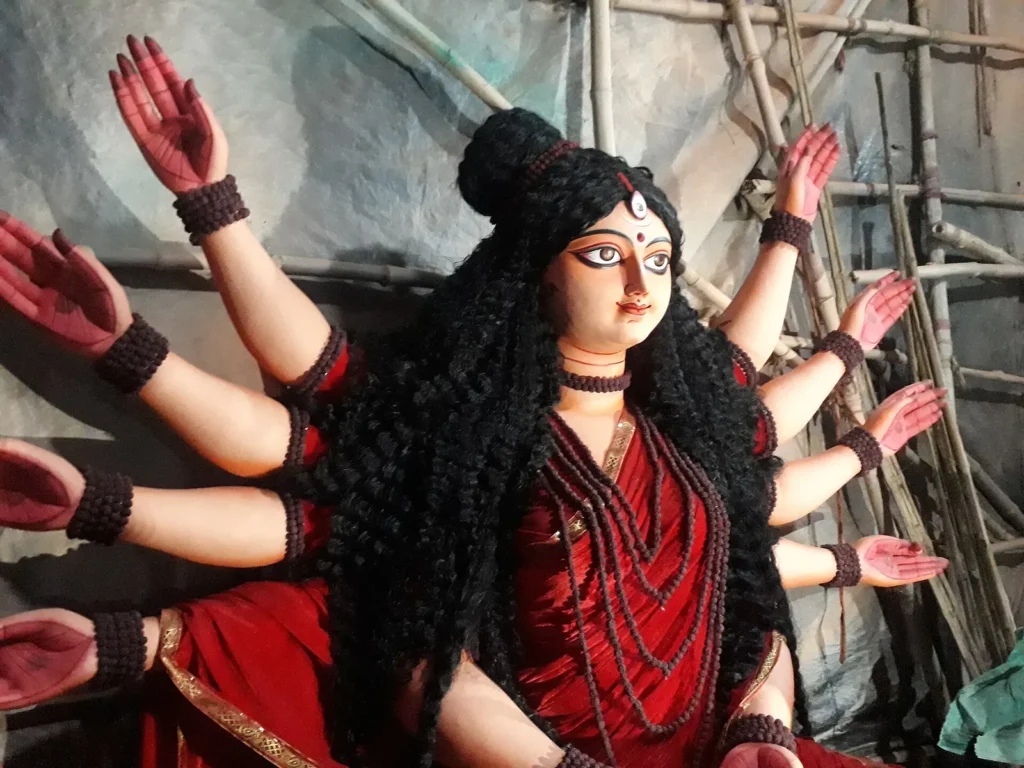
- Last come the clothes, hair, jewellery and decoration in pith (shola), tinsel and beaten metal.
The eyes of the Durga idols are traditionally painted last, around Mahalaya, in a step called chokkhu daan. By then most idols are finished and waiting to be collected.
When to visit Kumartuli
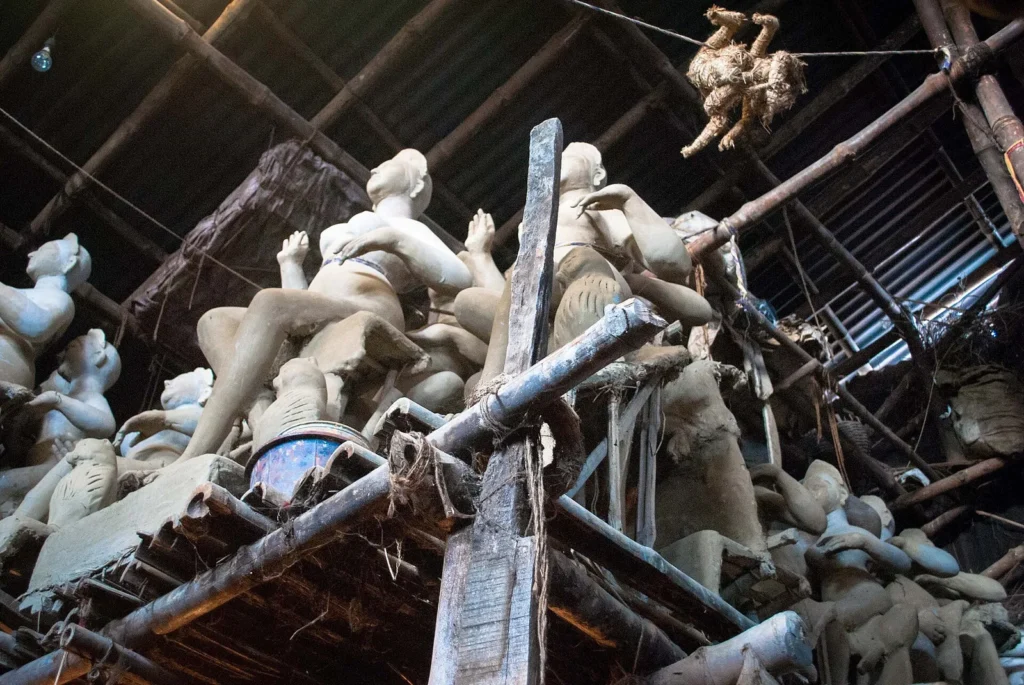
The quarter works all year, because there are idols for many festivals, but the scene changes a lot by month.
| Period | What you see |
|---|---|
| June to August | Frames, straw and first layers of clay on Durga idols |
| September to Durga Puja | Painting, dressing and finished idols, plus the most visitors |
| Durga Puja week | Most big idols have left for their pandals |
| October to November | Kali and Jagaddhatri idols |
| January to February | Saraswati idols, for Saraswati Puja |
For the Durga idols, the best window is the four to six weeks before the festival, when you can see both raw clay and painted figures. Durga Puja falls in September or October, so check the dates for the year you are travelling.
Mornings are better than afternoons. The light in the narrow lanes is softer, the heat is lower and the artisans have not yet been stopped by many visitors. In the monsoon, expect wet lanes and plastic sheets over the idols.
How to get to Kumartuli
- By metro: Sovabazar Sutanuti station on the Blue Line is the closest. From there it is a short walk west toward the river.
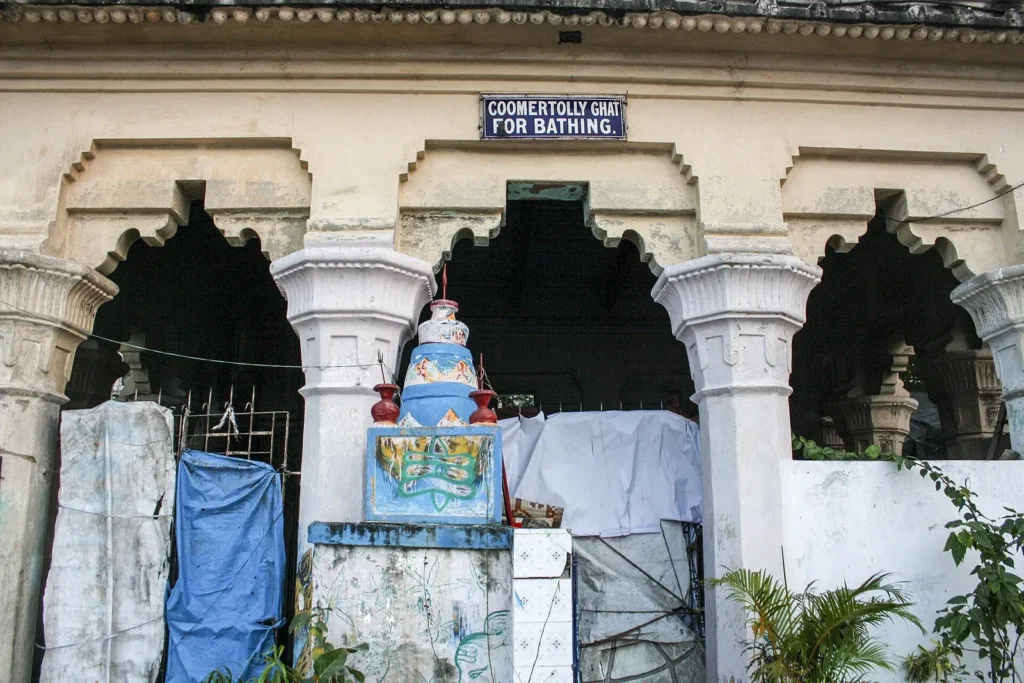
- By ferry: Kumartuli has its own ghat on the Hooghly, and boats along the river make it easy to combine with other ghats.
- By road: taxis and app cabs can drop you on Rabindra Sarani or near the ghat. The inner lanes are too narrow for cars, so plan to walk.
If you stay in central or south Kolkata, the metro is the simplest way to avoid north Kolkata traffic.
Visiting respectfully
Kumartuli is a place of work, and in peak season the artisans are racing deadlines. A few simple habits help:
- Ask before taking close photos of people. Most artisans are used to cameras, but a nod or a question goes a long way.
- Do not touch the idols, even ones that look finished. Wet clay and fresh paint mark easily.
- Keep to the side of the lane. Handcarts and idols being carried out need the space.
- Avoid tripods and large groups in the tightest lanes.
- Some workshops may ask for a small tip or fee for photography. Pay if you have taken their time, or move on politely.
- Wear shoes you do not mind getting muddy, especially in the rainy months.
If you would like more context, guided heritage walks in north Kolkata often include Kumartuli and Sovabazar Rajbari. A guide can also help you talk to artisans who speak only Bengali.
What to see beyond the workshops
The workshops are the main sight, but a few things nearby round out the visit:
- Kumartuli Ghat, the riverside steps at the edge of the quarter.
- Kumartuli Park Durga Puja, one of the well-known community pujas in north Kolkata, worth seeing during the festival itself.
- Sovabazar Rajbari, the mansion of the Deb family, linked to the founding story of the quarter.
- Bagbazar, just north, which holds one of the older community pujas.
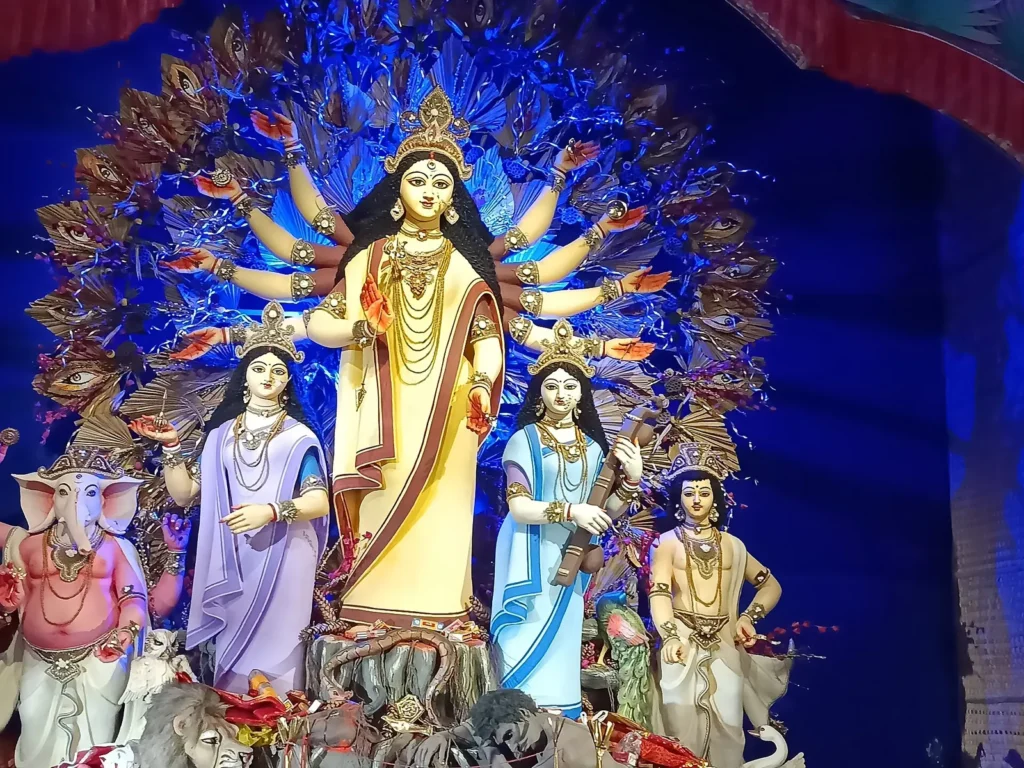
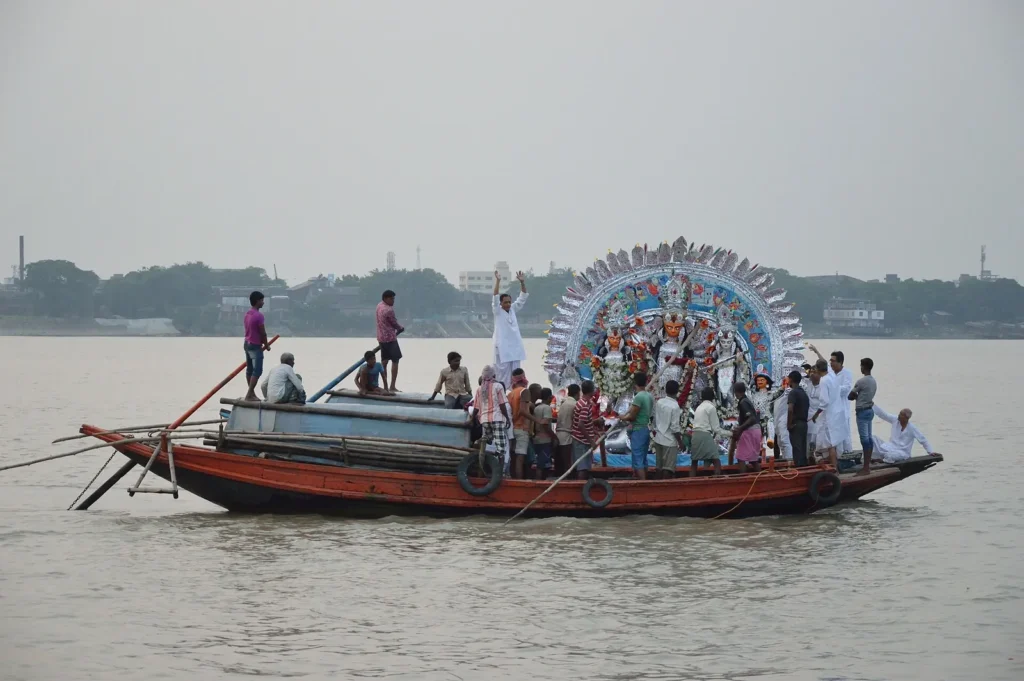
During Durga Puja you can follow the idols from here to the pandals. Our guide to Durga Puja pandals in Kolkata covers which ones to see and how to plan the nights. At the end of the festival, idols are taken to the ghats along the Hooghly for immersion.
Combining Kumartuli with the rest of Kolkata
Kumartuli fits well into a north Kolkata morning. You can walk the lanes early, take a ferry or cab south along the river, and end at Prinsep Ghat for sunset. The Howrah Bridge is a short ride away, and the Indian Museum makes a good indoor stop in the heat of the afternoon. For a fuller list, see our places to visit in Kolkata.
FAQ
Is there an entry fee for Kumartuli?
No. Kumartuli is a residential and working neighbourhood with no ticket or gate. Some workshops may ask for a small fee or tip if you photograph inside.
When is the best time to visit Kumartuli?
From July to early October, before Durga Puja, when the Durga idols are at every stage from straw to paint. Mornings are the best time of day.
How do I reach Kumartuli by metro?
Get off at Sovabazar Sutanuti on the Blue Line and walk west toward the Hooghly. The workshops start within a few minutes.
Can I buy an idol at Kumartuli?
Yes. Artisans take orders for idols of all sizes, including small ones for homes and pujas abroad. Order well ahead of the festival season, as large orders fill up early.
Is Kumartuli open during Durga Puja?
The lanes are open, but most of the big Durga idols have left for their pandals by then. Visit before the festival if you want to see the work in progress.
Official resources: Kolkata Municipal Corporation, notable places; UNESCO, Durga Puja in Kolkata
Photo credits
Featured image: Pinakpani / Wikimedia Commons, CC BY-SA 4.0; A short history: Pinakpani / Wikimedia Commons, CC BY-SA 4.0; How an idol is made: Sujay25 / Wikimedia Commons, CC BY-SA 4.0; When to visit Kumartuli: Bernard Gagnon / Wikimedia Commons, CC BY-SA 3.0; How to get to Kumartuli: Indrajit Das / Wikimedia Commons, CC BY-SA 4.0; Visiting respectfully: Pinakpani / Wikimedia Commons, CC BY-SA 4.0; What to see beyond the workshops: Tarunsamanta / Wikimedia Commons, CC BY-SA 4.0; What to see beyond the workshops: Biswarup Ganguly / Wikimedia Commons, CC BY 3.0.


